
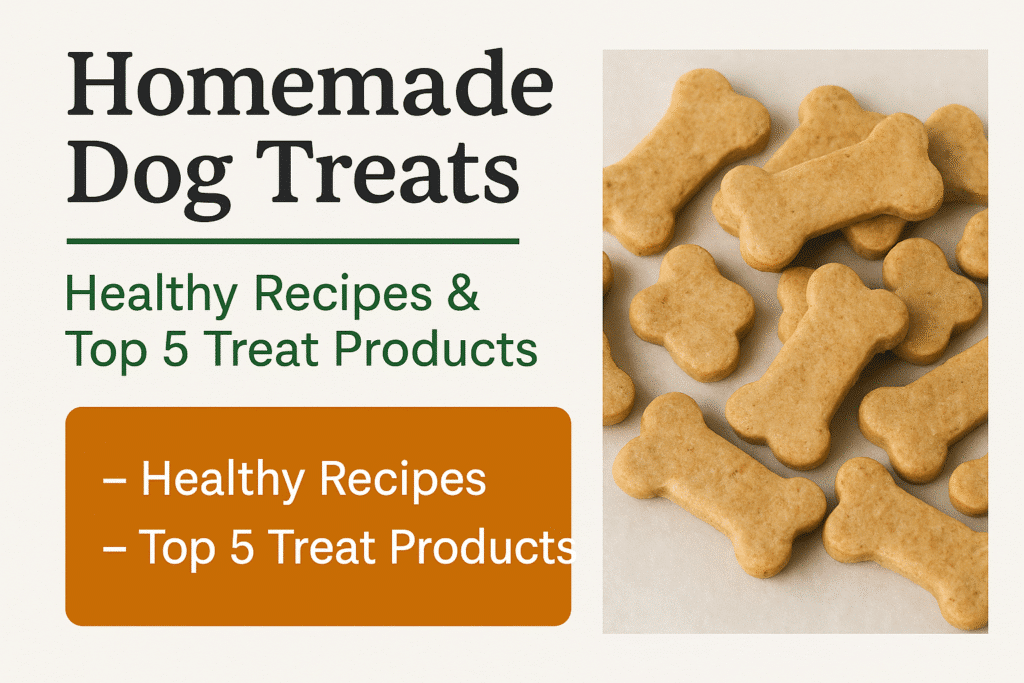
Homemade Dog Treats: 3 Easy, Healthy Recipes (Plus Safety Rules and Tools)
Good homemade dog treats need only a few dog-safe ingredients, a small portion size and proper storage. Below are three easy recipes (peanut butter pumpkin biscuits, frozen banana yogurt bites and applesauce oat cookies), a list of ingredients to avoid, and the tools that make baking easier. Key Takeaways Check every label for xylitol. It is in some peanut butters and is highly toxic to dogs. Treats should stay under about 10% of daily calories. The rest comes from complete dog food. Skip toxic foods: grapes and raisins, chocolate, onions, garlic, macadamia nuts and anything with xylitol. No preservatives means short shelf life. Refrigerate or freeze what you will not use soon. Dogs with allergies, diabetes or pancreatitis need vet guidance before new treats. General information, not veterinary advice. Contains affiliate links; we may earn a commission at no extra cost to you. See our Disclosure. Why Make Homemade Dog Treats? You know what is in them, with no artificial colors or mystery fillers. Easy to customize for allergies and sensitive stomachs, with your vet’s okay. Good for training, since you can make tiny, low-calorie rewards. Often cheaper than premium store-bought treats. Safety First: Foods Dogs Must Not Have Ingredient Why to avoid it Xylitol (birch sugar) Can cause a dangerous drop in blood sugar and liver failure. Check peanut butter, yogurt and baked goods labels. Grapes and raisins Can cause kidney failure in dogs. Chocolate and cocoa Contains theobromine, which is toxic. Onions, garlic, chives Can damage red blood cells. Macadamia nuts Can cause weakness, vomiting and tremors. Added salt and sugar Unnecessary and can cause problems over time. If your dog eats something toxic, call your vet or an animal poison control line at once. Recipe 1: Peanut Butter and Pumpkin Biscuits Ingredients: 2 cups whole wheat flour (or oat or rice flour for sensitive dogs), 1 cup plain pumpkin puree (not pie filling), 1/2 cup natural peanut butter with no xylitol, 2 eggs, and optional 1 teaspoon cinnamon. Heat the oven to 350°F (175°C) and line a baking sheet with parchment. Mix the pumpkin, peanut butter and eggs until smooth. Stir in the flour gradually until a dough forms. Add a little flour if sticky, or a spoonful of water if dry. Roll to about 1/4 inch thick and cut into shapes. Bake 15 to 20 minutes until firm and lightly golden. Cool completely before serving. Notes: Pumpkin adds fiber, and peanut butter adds protein and fat. For small dogs, cut tiny pieces. Store in the fridge for up to a week or freeze for longer. Recipe 2: Frozen Banana Yogurt Bites (No Bake) Ingredients: 2 ripe bananas, 1 cup plain unsweetened yogurt with no artificial sweeteners, and 1/4 cup xylitol-free peanut butter. Blend or mash everything until smooth. Spoon into silicone molds or an ice cube tray. Freeze for several hours, then pop out and store in a freezer bag. Notes: Good for hot days. Let one soften for a minute if your dog gulps food. Dairy upsets some dogs, so start with a small piece. Swap banana for blueberries or watermelon without seeds if you like. Recipe 3: Applesauce Oat Cookies Ingredients: 1 cup unsweetened applesauce, 2 cups oat flour (blend rolled oats until fine), 1 egg, and optional 1/2 teaspoon cinnamon. Heat the oven to 350°F (175°C). Mix applesauce, egg and cinnamon, then stir in the oat flour to form a dough. Scoop small balls onto a lined sheet and flatten, or roll and cut. Bake 15 to 20 minutes until dry and firm. Cool fully. Notes: These are soft, low in fat and easy to break up for training. Check that the applesauce is plain, with no sugar or sweetener. Tips for Making Safe Treats Keep portions small. Count treats toward the 10% daily calorie limit. Introduce one new ingredient at a time and watch for itching, loose stool or vomiting. Dry them well. Moist treats spoil faster. For longer life, finish with a low oven for extra drying. Label and date batches, and freeze portions. Throw away treats that smell off or show mold. Adjust for health needs. Dogs with pancreatitis, kidney disease or diabetes need vet-approved ingredients. Tools That Make It Easier Paw and Bone Silicone Molds Silicone molds work for frozen treats and baked biscuits, and are easy to clean. Look for food-grade silicone. Dog Bone Cookie Cutters Stainless steel cutters in several sizes let you make tiny training rewards or larger biscuits. Mini Dog Treat Maker A small electric treat maker like the DASH bakes treats without heating a full oven, which suits small batches. Baking Mixes and Kits If you want a shortcut, dog-safe baking mixes and birthday cake mixes come with measured ingredients. Check the ingredient list for your dog’s allergies. Airtight Treat Storage Store cooled treats in an airtight container. Our airtight dog food container guide has storage ideas, and the pet shop has more supplies. Frequently Asked Questions How long do homemade dog treats last? Soft, moist treats keep about a week in the fridge. Fully dried crunchy ones last longer in an airtight container, and all keep well in the freezer for a couple of months. Can I use regular flour? Whole wheat or oat flour is a good choice for most dogs. Use rice or oat flour for wheat-sensitive dogs. Is peanut butter safe for dogs? Plain, unsalted peanut butter is usually fine in small amounts, but it must not contain xylitol. Check the label every time. How many treats can my dog have per day? Keep treats to about 10% of daily calories. For a small dog that may be just a few tiny pieces. Can puppies eat homemade treats? Yes, in tiny amounts once they are eating solid food. Avoid rich or sugary ingredients and check with your vet. Sources ASPCA: People Foods to Avoid Feeding Your Pets FDA: Keep Xylitol Away From Dogs Last reviewed: November 2026. If your dog eats a toxic food, call your vet or an
Homemade Dog Treats: 3 Easy, Healthy Recipes (Plus Safety Rules and Tools) Read More »