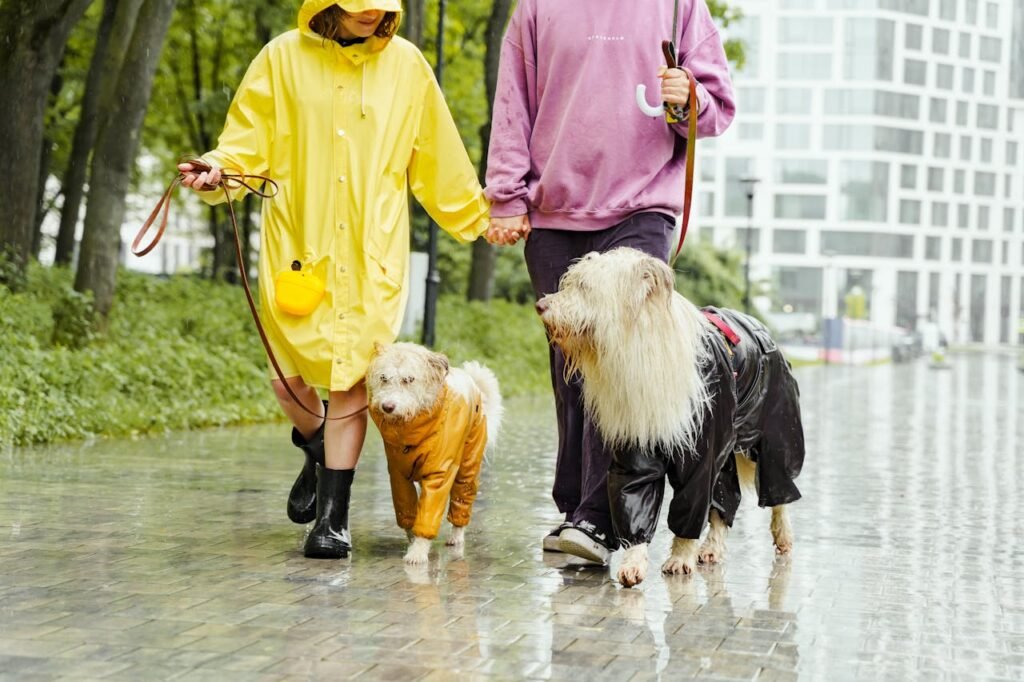
You can walk a dog in the rain safely. Rain itself is not harmful, but wet weather brings real risks: slippery ground, poor visibility, puddles with bacteria, and a dog who stays wet and cold. A raincoat, paw care, reflective gear and a good dry-off routine cover most of it. Key Takeaways Avoid puddles and standing water. PetMD notes they can hold bacteria such as leptospirosis, which spreads through rodent urine. Dry your dog completely after the walk, especially the paws, belly and ears. Use a raincoat and reflective gear, but take wet gear off right after the walk so your dog does not overheat or stay damp. Shorten the walk for puppies, seniors and cold-sensitive dogs, and replace it with indoor play in storms. Ask your vet about the leptospirosis vaccine if your dog often meets puddles or ponds. This article contains affiliate links. We may earn a commission if you buy through them, at no extra cost to you. See our Disclosure. Is It Safe to Walk a Dog in the Rain? Yes, in most weather. Dogs need regular exercise whatever the forecast, and a light or moderate rain is fine for a healthy dog. Skip or shorten the walk in lightning, flooding, strong wind or freezing rain. Small, short-haired, very young, elderly or sick dogs lose heat faster, so keep their walks brief and gear them up. Rainy Day Dangers to Know Risk Why it matters What to do Puddles and standing water Can hold bacteria such as leptospirosis, chemicals and sharp objects Steer around them, do not let your dog drink, ask your vet about vaccination Slippery ground Falls and joint strain, especially for seniors Choose paved, even routes and grippy boots if tolerated Low visibility Drivers may not see you Reflective leash, collar or vest, plus a light Staying wet Chills and skin irritation Towel dry fully, warm place to rest Mushrooms and toads Some are toxic and appear after rain Keep your dog from sniffing and eating things on the ground Storms Thunder fear and lightning Stay inside during storms 12 Tips for Walking Your Dog in the Rain 1. Check the forecast and time your walk Rain often comes in waves, so a break between showers makes a good window. Dogster suggests planning around the forecast, and waiting out severe weather indoors. 2. Put on a well-fitting raincoat A coat that covers the neck, back and sides keeps your dog drier, and it makes drying faster. Choose one made for your dog’s size and take it off as soon as you are home. Trupanion warns that a coat left on indoors can cause overheating. 3. Protect the paws If your dog tolerates boots, look for a snug fit and a non-slip sole. If not, wash and dry the paws as soon as you get home. PetMD suggests unscented wipes or a mild soap. Practice wearing boots indoors with treats first. 4. Keep your dog away from puddles Most dogs love to splash, but PetMD says puddles can hold bacteria and toxins, and the most common is leptospirosis, spread by rodent urine. Deep puddles can also hide glass or other sharp objects. Walk around them and carry fresh water for drinking. 5. Pick safe routes Choose well-lit, paved paths with good traction, and avoid flooded areas, muddy banks and busy roads. 6. Be visible Rain and dim light make you harder to see. Use a reflective leash, collar or vest, plus a clip-on light, and wear bright clothing yourself. 7. Shorten the walk when needed Short walks are fine. Do a quick potty trip in heavy rain, then burn energy indoors. 8. Set up a dry-off station Keep towels, wipes and a mat by the door. As soon as you come in, remove gear and dry your dog, focusing on the paws (between the pads), belly, chest and ears. Floppy-eared dogs can get ear infections when moisture lingers, so dry the ears gently. 9. Clean the paws and check for cuts Wipe off mud and road residue, and check between the toes for cuts, stones or redness. A paw balm can help protect pads that stay wet. 10. Bathe only when needed A damp-dog smell or a muddy coat may call for a gentle shampoo, but frequent baths can dry the skin. Rinse and dry well. 11. Watch for signs of a chill Shivering, a hunched posture, lethargy or reluctance to move mean it is time to head in, warm up and dry off. Older dogs and dogs with arthritis may be stiffer after wet, cold walks. 12. Have a rainy-day indoor plan When the weather is too bad, trade the walk for puzzle feeders, scent games, short training sessions, tug or hide-and-seek. See our guide on keeping pets warm in winter for cold-weather care. When to Call the Vet Your dog drank puddle water and then has vomiting, diarrhea, fever, lethargy or increased thirst Limping, or a cut or swollen paw Coughing, heavy breathing or lasting shivering after the walk Red, smelly or scratched ears after getting wet Frequently Asked Questions Can dogs get sick from walking in the rain? Rain alone does not make a healthy dog sick. The risks come from staying wet and cold, and from contaminated puddles. Dry your dog well and avoid standing water. Do dogs need raincoats? Not all of them. Thick-coated dogs often cope well, but small, short-haired, thin, young and senior dogs benefit from a coat. A coat also makes drying easier. How long can I walk my dog in the rain? It depends on the dog and the temperature. Short walks of 10 to 20 minutes are fine for most, and you should end sooner if your dog shivers or seems miserable. What about my dog’s fear of rain or thunder? Use short, calm outings with treats, and stay inside during storms. Do not force a frightened dog. Ask your vet or a trainer for help with noise anxiety. How do I get