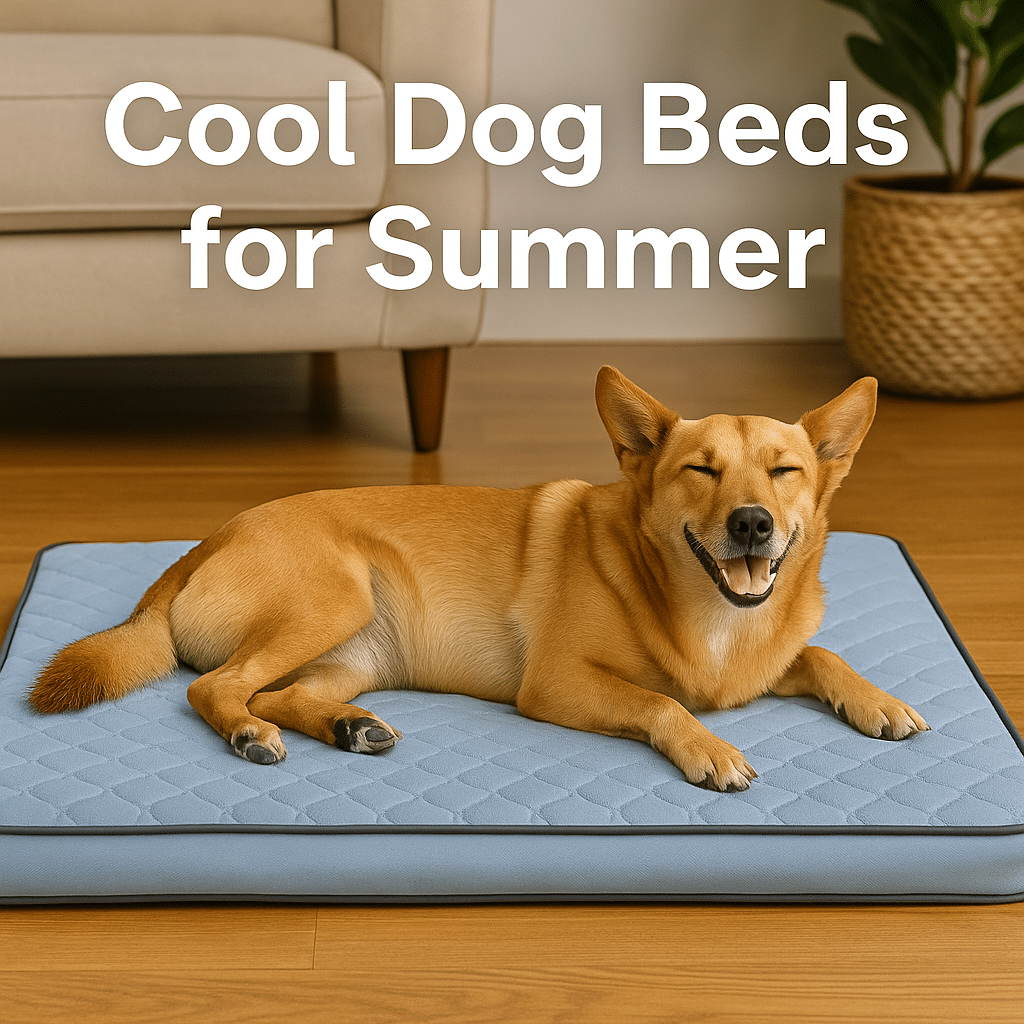

Use a cooling vest when your dog is active outdoors, and a cooling mat when your dog is resting. Evaporative vests have the better research behind them, but they work poorly in humid weather and are too damp for indoor use. Mats need no prep and suit naps, crates and car rides. Many owners use both.
Key Takeaways
- Use a cooling vest for walks and outdoor play, and a cooling mat for rest, crates and car rides.
- In a 2022 study, an evaporative vest kept dogs’ core temperature about 0.6 °C (1.1 °F) lower during and after exercise.
- Evaporative vests work poorly in humid weather. Pick an ice-pack vest or a mat instead.
- If your dog overheats, cool them with water first, then go to the vet.
Neither one replaces shade, water and avoiding the hottest part of the day. If your dog is already overheating, cool them with water right away (see the first aid section below).
Cooling Vest vs Cooling Mat at a Glance
| Cooling vest | Cooling mat | |
|---|---|---|
| Best for | Walks, hikes, outdoor play | Naps, crates, cars, resting after exercise |
| How it cools | Evaporating water, or frozen packs | Pressure-activated gel, water, or cooling fabric |
| Works while moving | Yes | No, only while lying on it |
| Humid weather | Evaporative vests work poorly; ice-pack vests do better | Works in any weather |
| Indoor use | Not ideal, because it’s damp | Ideal |
| Upkeep | Re-wet every few hours, or refreeze packs | Little to none |
Do Dog Cooling Vests Work?

Yes, the evaporative kind does, according to the best study available. In a 2022 study in the journal Animals, 13 military working dogs ran for 20 minutes in Spain in August, at about 28 to 31 °C (82 to 88 °F). On average, their core temperature was about 0.6 °C (1.1 °F) lower in an evaporative vest than with no vest, and the gap was largest during recovery afterward. A phase-change (cold pack) vest made a much smaller difference.
That’s a small study, but it’s a controlled one, and it backs up what owners report: evaporative vests help, especially in dry heat.
How long they last: Rover’s review of the Ruffwear Swamp Cooler found it needed re-wetting about every two to three hours on a 70 °F day. In hotter weather, expect to re-wet it more often.
The humidity problem: an evaporative vest cools as water evaporates. In muggy weather, water evaporates slowly, so the vest cools less. If you live somewhere humid, like much of the Southeast, an ice-pack vest or a cooling mat is usually the better buy.
When a Cooling Mat Is the Better Choice
A cooling mat is the better pick if your dog:
- Spends hot days mostly indoors, or in a crate or car
- Is older, overweight or flat-faced, and rests more than they run
- Won’t tolerate wearing anything
- Lives somewhere humid
The main types:
- Pressure-activated gel mats cool when your dog lies down and recover once they get up. No water or freezer needed.
- Water-filled beds stay cooler than your dog’s body and feel softer to lie on.
- Cooling fabric pads are thin, washable and easy to travel with, but they cool less than gel or water.
Put any mat in the shade, or indoors. Direct sun will warm it up. For raised and breathable options, see our 10 cool dog beds for summer.
Popular Options by Type
| Product | Type | Good for |
|---|---|---|
| Ruffwear Swamp Cooler | Evaporative vest | Active dogs in dry heat; reviewed by Rover |
| SGODA Dog Cooling Vest | Evaporative vest | A lower-priced evaporative option |
| Kurgo Core Cooling Vest | Evaporative vest | Everyday walks |
| The Green Pet Shop Cool Pet Pad | Pressure-activated gel mat | Indoor naps and crates, no prep |
| Arf Pets Self-Cooling Mat | Gel mat | Crates, floors and car seats |
| K&H Pet Products Cool Bed III | Water-filled bed | Shaded patios and dogs who like a softer surface |
Check sizing charts carefully for vests. A vest that’s too tight can rub under the front legs, and one that’s too loose cools less.
How to Use Them Safely
- Keep evaporative vests wet. Carry a water bottle to re-soak the vest on longer walks.
- Don’t leave a dog alone in a vest. Check for rubbing under the legs and neck.
- Supervise chewers on mats. Gel and water mats can be punctured.
- Watch for early warning signs. Heavy panting, trouble breathing, or not wanting to keep going mean it’s time to stop, find shade and cool down.
Heatstroke First Aid: Cool First, Then Go to the Vet

If your dog shows signs of heatstroke, such as heavy panting, weakness, not wanting to move, or collapse, cool them right away, before you drive to the vet. The Royal Veterinary College’s advice is “cool first, transport second.”
- Young, healthy dogs: put them in cool or cold water, keeping their head above water. Cold water was the most effective method in the RVC’s research and caused no harm.
- Older, unwell or unconscious dogs: pour or spray water over them, any temperature cooler than the dog, and keep air moving with a fan, air conditioning or open windows.
- Then call your vet and go. Cool the car before putting your dog in, and keep air moving over them during the drive.
The old advice to use only lukewarm water and cool slowly is a myth, according to the RVC’s guide to cooling hot dogs. Speed matters: in RVC research, 97% of dogs with mild heat illness survived, but only 43% with severe heatstroke did. Cooling a dog at the first signs saves lives.
Walking in summer storms too? See our tips for walking a dog in the rain.
Frequently Asked Questions
Do cooling vests work for dogs?
Yes. In a 2022 study of military working dogs, an evaporative cooling vest kept average core temperature about 0.6 °C lower than no vest during and after exercise.
Is a cooling vest or a cooling mat better?
It depends on what your dog is doing. A vest is better for activity outdoors. A mat is better for rest, indoors and in humid weather.
Do cooling vests work in humid weather?
Evaporative vests work poorly in high humidity because the water can’t evaporate quickly. Choose an ice-pack vest or a cooling mat instead.
How long does a cooling vest stay cool?
Rover’s test found an evaporative vest needed re-wetting about every two to three hours at 70 °F, and more often in hotter weather.
Can I use cold water on an overheated dog?
Yes. The Royal Veterinary College recommends cold-water immersion for young, healthy dogs with heatstroke. For older or unwell dogs, pour on cool water and use a fan. Cool your dog first, then go to the vet.
Can my dog sleep on a cooling mat all night?
Yes, if your dog chooses to. Place it where your dog can move off it, and check gel or water mats for damage regularly.
Sources
- Animals (MDPI), 2022: Cooling vests in military working dogs
- Rover: Ruffwear Swamp Cooler vest review
- Royal Veterinary College: Cool first, transport second
- Royal Veterinary College: How to cool hot dogs (PDF guide)
Last reviewed: November 2026. This article is for general information and is not a substitute for advice from your veterinarian.