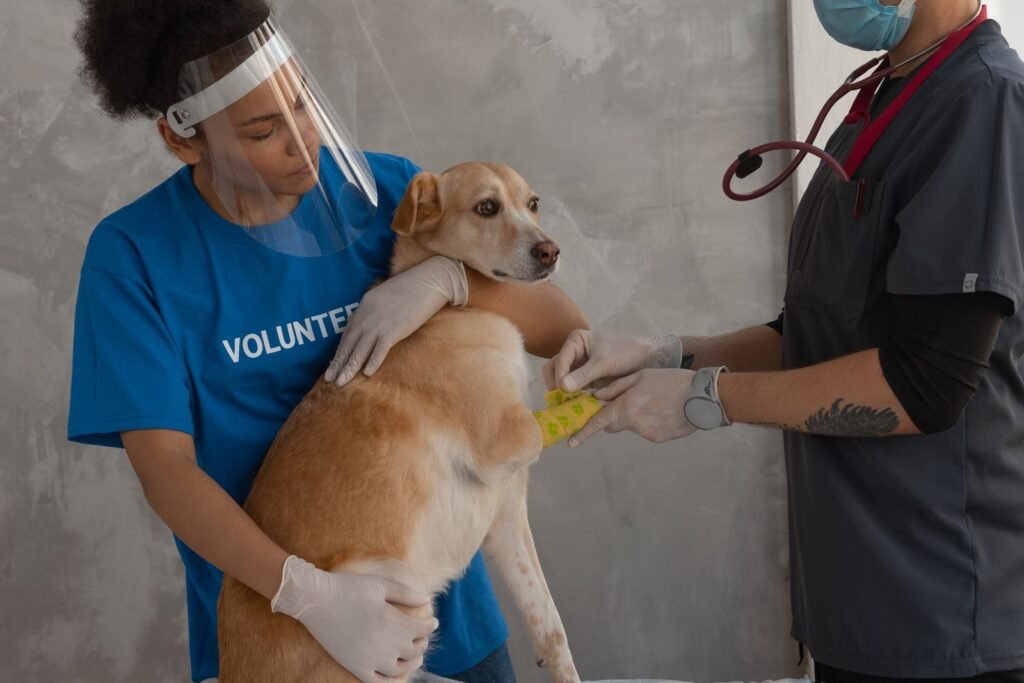
Pet first aid is the care you give your dog or cat in the minutes between an injury and the vet. It won’t replace a veterinarian, but it can stop bleeding, keep your pet breathing and get them to help safely. You need three things: a stocked kit, a few basic skills, and the right phone numbers saved before anything goes wrong.
Picture a Saturday hike. Your dog yelps, lifts a front paw, and there’s blood on the rocks from a cut pad. You’re 40 minutes from the car. What you do in the next five minutes matters more than anything you read afterward. This guide walks you through exactly that: what to pack, what normal looks like, and what to do first for the emergencies vets see most.
🩹 Quick Answer: Pet First Aid Basics
- Stay safe first: even gentle pets bite when hurt. Move slowly, keep your face away from their mouth and use a muzzle if needed (never if they’re vomiting).
- Call ahead: phone your vet or the nearest 24/7 emergency clinic while you’re on the way.
- Bleeding: firm, steady pressure with clean gauze. Add layers instead of lifting to check.
- Poisoning: call ASPCA Animal Poison Control at (888) 426-4435. Don’t make your pet vomit unless a vet tells you to.
- Not breathing, no heartbeat: start CPR at 100 to 120 compressions a minute, 2 breaths after every 30.
This guide is general information, not veterinary advice. Any first aid should be followed by care from your vet. See our Disclosure.
In this guide
Pet First Aid Basics: The First 60 Seconds
The first minute decides how the rest goes, and it starts with you, not your pet. A scared, hurt animal doesn’t recognize the hands trying to help. That sweet Lab who sleeps on your feet can snap without warning when you touch a broken leg.
The American Veterinary Medical Association’s first aid tips put your safety first for a reason: you can’t help your pet if you’re bitten too. Run through this quick routine every time:
- Stop and look. Is the scene safe? Traffic, another dog, a hot road? Deal with that first.
- Approach slowly and talk softly. Don’t hug an injured pet, and keep your face away from their mouth.
- Check the big three: breathing, bleeding, and whether they respond to their name.
- Muzzle if needed. Use a soft muzzle or a strip of gauze, but never on a pet that’s vomiting or struggling to breathe.
- Call while you move. Have someone phone the vet or emergency clinic so they’re ready when you arrive.
Now that you know the order of operations, let’s make sure the right supplies are within reach when you need them.
Pet First Aid Kit Checklist
A good pet first aid kit is mostly the same gear you’d use on a person, plus a few pet-specific items like a muzzle, a slip leash and a thermometer. The list below follows the Merck Veterinary Manual’s first aid kit for pets and the AVMA kit list, sorted by when you’d reach for each item.
| Item | What it’s for | Pro note |
|---|---|---|
| 🩹 Sterile gauze pads + rolled gauze | Pressing on bleeding, covering wounds | Rolled gauze doubles as an emergency muzzle |
| 🩹 Self-stick stretch bandage | Holding gauze in place | Snug, never tight; you should slip a finger under it |
| 🩹 Adhesive tape, blunt-tip scissors | Securing bandages, trimming fur | Blunt tips so a wriggling pet can’t get poked |
| 💧 Saline solution | Flushing eyes and dirty wounds | Plain saline, not contact lens cleaner |
| 🌡️ Digital thermometer + lubricating jelly | Checking for fever or heatstroke | Label it “pet only” |
| 🔍 Tweezers + tick remover | Splinters, ticks, burrs | A flashlight helps you see in fur |
| 💉 Bulb or oral syringe | Flushing wounds, giving liquid meds | Only give meds your vet has approved |
| 🧤 Disposable gloves | Keeping wounds clean, protecting you | Pack 2 to 3 pairs |
| 🐕 Muzzle + slip leash | Safe handling of a hurt, scared pet | Never muzzle a pet that is vomiting |
| 🧣 Towel or blanket | Wrapping cats, keeping pets warm, a stretcher | A towel “burrito” is the safest way to hold a cat |
| 📋 Phone numbers + records | Vet, 24/7 ER clinic, poison control, vaccine records | Save them in your phone and on paper |
| 💊 A few days of your pet’s daily meds | Evacuations and long trips | Check expiry dates yearly |
| ⚠️ 3% hydrogen peroxide | Making a dog vomit, ONLY on a vet’s instructions | Never on wounds, never “just in case” |
Sources: Merck Veterinary Manual, AVMA. Ask your vet before you add any medicine, including antihistamines, so you know the right dose for your pet.
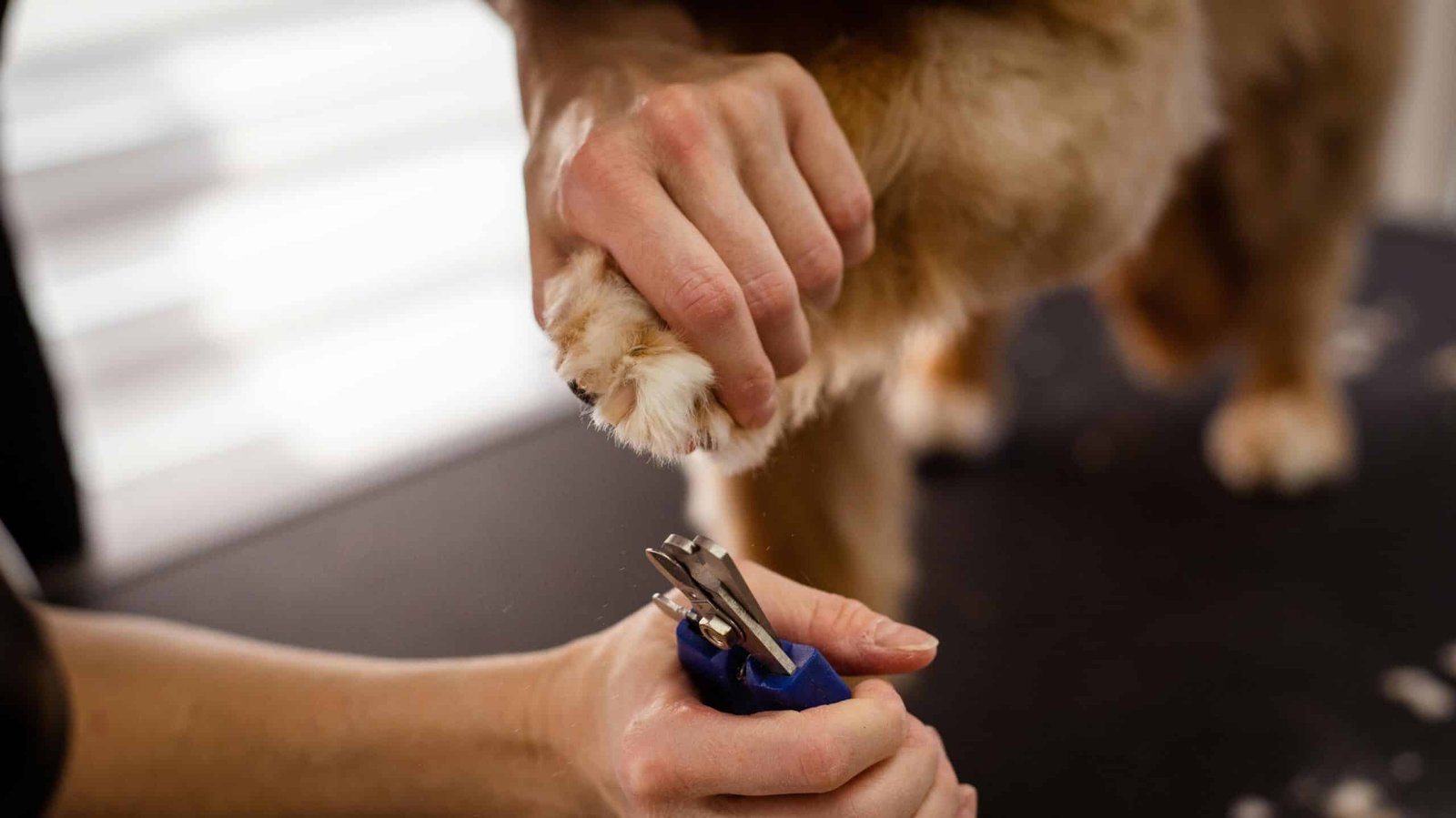
Should you buy a ready-made kit or build your own? Either works. A pre-made pet kit saves time, but check it against the list above, because many skip the muzzle or thermometer. Building your own costs a little more effort and lets you use what you already have in the bathroom cabinet.
Here’s the part most people miss: one kit isn’t enough. Keep a full kit at home and a smaller pouch in the car or hiking pack. If you hit the trails often, our guide to hiking with dogs has a gear checklist that pairs well with this one.
Normal Vital Signs for Dogs and Cats
You can’t spot “not normal” if you don’t know your pet’s normal. Healthy dogs and cats run a temperature between 100 and 102.5°F, and their resting heart and breathing rates depend on size and species. These ranges come from the Animal Medical Center’s vital signs guide.
| Pet | Temperature | Resting heart rate | Resting breathing rate |
|---|---|---|---|
| 🐕 Small dog | 100–102.5°F | 90–120 beats/min | 18–34 breaths/min |
| 🐕 Medium dog | 100–102.5°F | 70–110 beats/min | 18–34 breaths/min |
| 🐕 Large dog | 100–102.5°F | 60–90 beats/min | 18–34 breaths/min |
| 🐈 Cat | 100–102.5°F | about 140–180 beats/min | 16–30 breaths/min |
Count for 30 seconds and double it. Measure while your pet is calm or asleep.
To count breaths, watch the chest rise and fall while your pet sleeps. Each rise-and-fall is one breath. For heart rate, place your hand on the left side of the chest just behind the elbow, or feel the pulse on the inside of the back thigh.
Try it tonight. Say your 60-pound shepherd mix is snoozing on the couch and you count 11 breaths in 30 seconds. That’s 22 a minute, right in the normal range. Write it on that kit card. Next time he seems “off,” you’ll have a real number to compare.
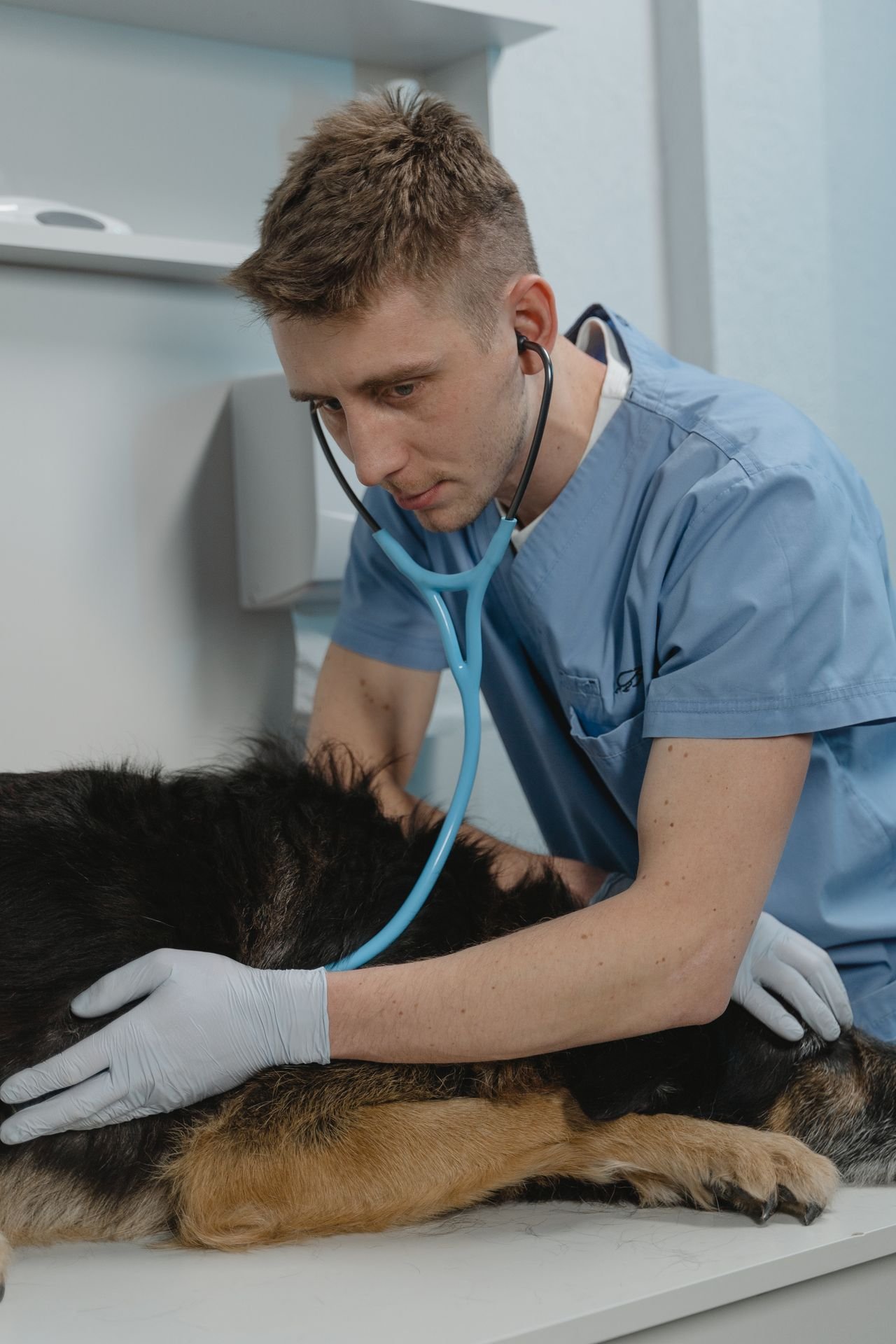
Gums tell you a lot, too. Healthy gums are usually moist and pink. Pale, white, blue or gray gums are a reason to call the vet right away. With your baseline in hand, you’re ready for the situations that actually happen.
What to Do in Common Pet Emergencies
For almost every emergency, the pattern is the same: keep yourself safe, do one or two simple things to stabilize your pet, and get to the vet. Here’s what that looks like for the problems owners face most.
Bleeding and cuts
Press a clean gauze pad or cloth firmly on the wound and hold steady pressure. If blood soaks through, add more layers on top. Don’t peel the first layer off to look, because that pulls away the clot that’s forming.
Once bleeding slows, wrap the area with a stretch bandage that’s snug but not tight. Toes swelling or turning cold means it’s too tight. Bleeding that won’t stop with firm pressure, spurting blood or a deep wound needs the emergency vet. Skip homemade tourniquets unless you’ve been trained, since they can damage the leg.
Poisoning or toxic ingestion
Your dog just ate half a pack of sugar-free gum, or your cat chewed a lily. Take away whatever’s left, grab the package, and call your vet or the ASPCA Animal Poison Control Center at (888) 426-4435. It’s open 24/7, and a consultation fee may apply.
Here’s the catch: making a pet throw up isn’t always safe. Some substances, like caustic cleaners or sharp objects, do more damage coming back up. The AVMA says to always contact your vet or poison control before inducing vomiting, and to give hydrogen peroxide only if they tell you to. Holidays bring extra hazards, so read up on which Thanksgiving foods are safe for dogs before the next family dinner.
Heatstroke
Heatstroke can kill within hours, and flat-faced breeds and heavy-coated dogs are at higher risk. According to VCA Animal Hospitals, a temperature above 103°F is abnormal and above 106°F is heatstroke. Watch for fast breathing, sticky or odd-colored gums, wobbling, confusion or seizures.
- Move your pet into shade or air conditioning right away.
- Pour cool, not cold, water over the head, belly, armpits and feet.
- Put them in front of a fan or mist them so the water can evaporate. Don’t drape wet towels over them; that traps heat.
- Skip ice packs and rubbing alcohol. VCA says these are no longer recommended.
- Head to the vet even if your pet seems to recover. Organ damage can show up later.

Prevention is easier than any rescue. Our comparison of a dog cooling vest vs cooling mat covers simple ways to keep dogs cool in summer. Cold is a risk too; for winter, see how to keep pets warm and spot hypothermia.
Choking
Pawing at the mouth, gagging and panic are the classic signs. If your pet is still coughing and breathing, let them try to clear it while you drive to the vet. If they can’t breathe and you can clearly see the object, carefully pull it out with your fingers or tweezers. Don’t blindly sweep the throat, since that can push it deeper. Abdominal thrusts for pets are best learned hands-on in a class, so you know how hard to press for your pet’s size.
Seizures
Watching a seizure is terrifying, but your job is simple. Move furniture and other pets away, dim the lights, and keep your hands away from the mouth (pets don’t swallow their tongues). Time it with your phone. A seizure that lasts longer than about 5 minutes, or several in a row, is an emergency. Even a single short seizure deserves a call to your vet the same day.
Broken bones, falls and car accidents
Keep your pet as still as possible and don’t try to set or splint a bone unless you’ve been trained. A pet hit by a car needs the vet even if they get up and walk away, because internal bleeding doesn’t show right away.
Insect stings and bites
Scrape a visible stinger out with a card edge, and apply a cool compress. Mild, local swelling is common. Face swelling, hives, vomiting or trouble breathing can mean an allergic reaction and needs the vet now. Our guide to mosquito bites on dogs shows what normal bites look like.
How to Do CPR on a Dog or Cat
Start CPR when your pet isn’t breathing and doesn’t respond. Veterinary CPR now follows the RECOVER guidelines, and the numbers are easy to remember: push 100 to 120 times a minute and give 2 breaths after every 30 compressions. Here’s the step-by-step version, based on Cornell University’s pet CPR guide and the American Heart Association’s 2025 report on pet CPR.
- Check. No breathing and no response? Start right away. Have someone else call the nearest emergency vet (not 911).
- Position by chest shape. Round-chested dogs like Labs lie on their side; push over the widest part of the chest. Narrow, deep-chested dogs like Greyhounds lie on their side; push right over the heart. Flat-chested dogs like Bulldogs go on their back; push on the middle of the breastbone.
- Cats and small dogs: wrap one hand around the chest and squeeze with your thumb over the heart, or use one hand. Two stacked hands is too much force.
- Push hard and fast. Lock your elbows, shoulders over your hands, and compress one-third to one-half of the chest width. Let the chest spring all the way back.
- Breathe. After 30 compressions, hold the mouth closed, keep the neck straight, and give 2 quick breaths into the nose.
- Keep going. Repeat 30:2. If two people are helping, swap every 2 minutes so compressions stay strong, and keep going on the way to the vet.
Not comfortable giving breaths? The AHA notes that hands-only compressions are an option when breaths feel unsafe. Pushing hard is far better than doing nothing.
How to Move an Injured Pet Safely
Getting to the vet is part of first aid, and the drive can make an injury worse if your pet is sliding around the back seat. Keep them calm, still and warm.
- Small dogs and cats: wrap them loosely in a towel with the head out, then place them in a carrier or a box.
- Large dogs: slide a board, a firm blanket or a car floor mat under them and lift with two people, keeping the back and neck straight.
- Keep warm: a light blanket helps a pet in shock, unless they’re overheated.
- Call ahead: tell the clinic what happened and when you’ll arrive so the team can be ready.
Emergency Vet Now, or Call Your Vet Tomorrow?
This is the question that keeps owners up at 2 a.m. When in doubt, call. Most clinics will tell you over the phone whether to come in. Use this table as a general guide.
| 🚨 Go to the emergency vet now | 📞 Call your vet the same day |
|---|---|
| Not breathing, or no heartbeat | Limping but still putting weight on the leg |
| Struggling to breathe; pale, blue or gray gums | Small cut that stopped bleeding |
| Bleeding that won’t stop with firm pressure | Vomiting or diarrhea once or twice, still bright and alert |
| Ate something toxic (call poison control on the way) | Mild, local swelling from an insect sting |
| Seizure over 5 minutes, several seizures, or collapse | Not eating for a day |
| Hit by a car or a bad fall, even if they seem fine | Squinting, red or runny eye |
| Swollen, hard belly with retching and nothing coming up | Broken nail that keeps oozing |
| Heatstroke signs | Any change that worries you |
| Male cat straining to pee with little or nothing coming out |
General guide only. Your vet knows your pet’s history; follow their advice.
Emergency visits can be expensive, which is one reason owners hesitate. Knowing how much dog insurance costs before a crisis can take money out of that decision. Regular annual wellness exams also catch problems before they become emergencies.
Pet First Aid Mistakes to Avoid
Most first aid mistakes come from good intentions and a racing heart. Watch for these:
- Making your pet vomit on your own. Always call your vet or poison control first.
- Using hydrogen peroxide on wounds. The AVMA advises against it. Flush with saline or clean water instead.
- Giving human medicine. Common painkillers can poison pets.
- Ice-cold water for heatstroke. Cool water and a fan work better and safer.
- Bandaging too tight. You should fit a finger under the wrap.
- Waiting to see if it gets better after a car accident, a fall or a toxin. Signs often show up hours later.
- Letting the kit go stale. Merck recommends checking expiry dates every year.
Pet First Aid Classes: Worth It?
Yes, if you can fit one in. Reading tells you what to do; practicing on a pet mannequin teaches your hands how hard to push and how to hold a frightened animal. The American Red Cross offers an online pet first aid course, and RECOVER-certified CPR classes are taught at many veterinary clinics. Ask your vet what’s available near you.
✅ 10-Minute Pet First Aid Prep
- ☐ Save your vet, the nearest 24/7 ER and (888) 426-4435 in your phone
- ☐ Build or check your kit; add a smaller one to the car
- ☐ Count your pet’s resting breaths and heartbeat and write them down
- ☐ Practice a towel wrap on your cat or a muzzle on your dog with treats
- ☐ Put a reminder in your calendar to restock the kit next year
Frequently Asked Questions
What should be in a pet first aid kit?
The basics are gauze pads and rolled gauze, a stretch bandage, tape, blunt scissors, saline, tweezers, a digital thermometer, gloves, a muzzle, a slip leash, a towel, your vet’s and poison control’s numbers, and a few days of your pet’s medicine. Add 3% hydrogen peroxide only for use on your vet’s instructions.
Can I use a human first aid kit on my pet?
Many supplies, like gauze, tape and saline, work for pets too. Add a muzzle, a pet thermometer and a slip leash. Never give human medicines from the kit, such as painkillers, without your vet’s approval.
How do you do CPR on a dog?
Lay the dog on its side (or on its back for flat-chested breeds), push hard and fast at 100 to 120 compressions a minute to one-third to one-half of the chest width, and give 2 breaths into the nose after every 30 compressions. Keep going on the way to the vet.
Should I make my dog throw up if it ate something toxic?
Not on your own. Call your vet or ASPCA Animal Poison Control at (888) 426-4435 first. Some poisons cause more harm coming back up, and the right treatment depends on what was eaten and when.
Where can I take a pet first aid class?
The American Red Cross offers an online pet first aid course, and many veterinary clinics and animal shelters host RECOVER-based CPR classes. Ask your vet for local options.
How often should I check my pet’s first aid kit?
At least once a year, and after every time you use it. Replace expired items and update your pet’s medicines and your emergency numbers.
The Bottom Line
Pet first aid comes down to a few habits you set up on a calm day: a stocked kit, your pet’s normal numbers on a card, and the right phone numbers saved. When something does happen, protect yourself, stop the bleeding or start CPR if needed, and get to the vet.
Take ten minutes this week to build your kit and count your pet’s resting breaths. It’s the kind of prep you hope you’ll never use, and you’ll be glad you did if you ever need it.
Keep learning: more guides from Pet Buddies Care
- Hiking with dogs: safety tips and gear checklist
- How to keep pets warm in winter: 15 vet-backed tips
- Can dogs eat Thanksgiving turkey? Safe parts and amounts
Sources: American Veterinary Medical Association (AVMA); Merck Veterinary Manual; ASPCA Animal Poison Control Center; VCA Animal Hospitals; Animal Medical Center (New York); Cornell University College of Veterinary Medicine and the RECOVER Initiative; American Heart Association News (2025); American Red Cross. Updated November 2026. This guide is general information, not veterinary advice. Check with your vet about your own pet.
What’s the one thing in your pet first aid kit you’d never leave home without? Tell us in the comments.