
Yes, dogs get mosquito bites, and fur doesn’t stop them. Mosquito bites on dogs usually show up as a small, raised, pink bump on thin-haired skin like the belly, ears or nose. Most fade on their own within a day or two.
Picture a warm evening. You’re on the back step, your dog is sniffing around the yard, and an hour later she’s chewing at her belly like it owes her money. You part the fur and find one little pink welt. Is that a mosquito bite? Should you put something on it? And the question most people never think to ask: could that one bite lead to something worse?
This guide answers all of it. You’ll learn how to spot a bite, the safe ways to calm the itch at home, the signs that mean “call the vet now,” why heartworm is the real reason bites matter, and which repellents are safe for dogs (plus a few popular ones that can poison them).
🦟 Quick Answer: Mosquito Bites on Dogs
- What they look like: a small, raised, pink or red bump, often on the belly, ears, nose or thin-haired spots. Your dog may lick or scratch it.
- How long they last: the itch usually fades within hours and the bump within 1 to 2 days.
- Home care: clean it with mild soap and water, hold a cool, damp cloth on it for 5 to 10 minutes, and stop the licking. Don’t use human creams or pills unless your vet says so.
- Go to the vet now: face swelling, hives, vomiting, trouble breathing, weakness or collapse.
- The real risk: heartworm, which spreads only through mosquito bites. Year-round prevention and a yearly test protect your dog.
In this guide
- Do mosquitoes bite dogs?
- What a mosquito bite on a dog looks like
- Mosquito bite or something else?
- How to treat mosquito bites on dogs at home
- When to call the vet
- The real danger: heartworm and other diseases
- Mosquito repellent for dogs: safe and unsafe
- How to prevent mosquito bites on dogs
- Mistakes to avoid
- FAQ
Do Mosquitoes Bite Dogs?
They do. Female mosquitoes need a blood meal to make eggs, and a warm, breathing dog is an easy target. A thick coat helps a little, but mosquitoes go straight for the places with less hair: the belly, inner thighs, the bridge of the nose, around the eyes and the tips of the ears.
Some dogs get bitten far more than others. A short-coated Boxer lounging on the patio at dusk is a mosquito buffet. A fluffy Samoyed napping indoors with the windows shut, not so much. Risk goes up when:
- It’s warm and humid, especially in the South and along the coasts.
- Your dog spends time outside at dawn, dusk or after dark, when many mosquitoes feed.
- There’s standing water nearby: ponds, ditches, bird baths, clogged gutters, even a forgotten flowerpot saucer.
- You hike, camp or walk near marshes and wet woods. Our guide to hiking with dogs covers what to pack for those trips.
And don’t assume winter is off. Mosquitoes can hang on in garages, crawl spaces and the warm pockets cities create around buildings and pavement. That’s one reason vets now push year-round protection, which we’ll get to below.
What Does a Mosquito Bite on a Dog Look Like?
A mosquito bite on a dog looks a lot like one on you: a small, raised, round bump, usually pink or red, often less than a centimeter across. It may feel slightly warm. On a dark-skinned or heavily coated dog you might not see it at all. You’ll notice the behavior first.
Watch for these signs:
- Licking, nibbling or scratching one spot again and again
- Rubbing the face or ears on the carpet or furniture
- Head shaking, if the bite is on an ear tip
- A few bumps clustered in one area after time outside, which usually means a hungry mosquito (or a small swarm) found your dog
Here’s a quick way to check. Run your fingertips slowly against the grain of the coat over the belly, inner legs and ears. A mosquito bite feels like a tiny, soft bump on the skin itself. If you feel something firm that’s attached and doesn’t move, look closer, because that’s more likely a tick.
Mosquito Bite or Something Else?
Itchy bumps on dogs have a lot of causes, and a mosquito gets blamed for plenty it didn’t do. This table shows the usual suspects. It’s a starting point, not a diagnosis, so let your vet confirm anything you’re unsure about.
| What you see | Likely cause | What to do |
|---|---|---|
| 🦟 One small pink bump, itch fades within a day | Mosquito bite | Clean, cool compress, stop the licking |
| 🔴 Clusters of tiny red dots near the tail base or back legs | Flea bites | Look for flea dirt; ask your vet about flea control |
| ⚫ Firm bump that stays put, sometimes with legs visible | Tick | Remove carefully with fine tweezers and save it if you can |
| 🟠 Many raised welts appearing fast, often with face swelling | Hives or allergic reaction | Call your vet right away |
| 🟡 Moist, red, oozing patch that grows quickly | Hot spot from licking | Vet visit; needs cleaning and treatment |
| 🐝 One swollen, painful spot, maybe with a stinger | Bee or wasp sting | Scrape out the stinger, cool compress, watch for spreading swelling |
General guide only. If a bump is changing fast or your dog seems unwell, call your vet.
Now that you can tell a mosquito bite from its look-alikes, let’s talk about what to actually do with one.
How to Treat Mosquito Bites on Dogs at Home
Most bites need very little. Your job is mainly to keep the spot clean and stop your dog from turning a tiny itch into a raw sore. Here’s the routine:
- Clean it. Wash the spot gently with lukewarm water and a little mild, unscented soap, then rinse and pat dry.
- Cool it. Hold a cool, damp washcloth on the bump for 5 to 10 minutes. Cold calms the itch and swelling. Wrap ice in a cloth if you use it, and never put ice straight on skin.
- Stop the licking. A light T-shirt over the belly, a soft cone or a recovery collar keeps tongues and teeth off the bite. Licking is what turns harmless bites into infections.
- Distract. A chew toy, a lick mat or a short training session gives your dog something better to do than scratch.
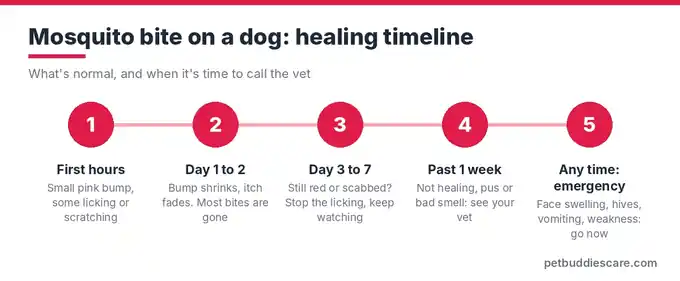
- Watch it for a week. Most bites are gone in a day or two. Check it daily with that photo trick.
What about the anti-itch cream in your bathroom cabinet? Here’s the catch. Dogs lick whatever you put on their skin, and many human products aren’t meant to be swallowed. Hydrocortisone creams, antihistamine pills like diphenhydramine and “bite relief” sticks can all be risky at the wrong dose or with certain ingredients. Your vet can tell you if one is safe for your dog and how much to use. Don’t guess on dosing.
Same goes for home remedies you see online. Baking soda paste, apple cider vinegar and essential oil sprays get shared a lot, but they can sting broken skin, and concentrated oils can be toxic to dogs (more on that below). Plain cool water is boring, and it works.
If the itching sticks around for days or your dog keeps chewing at the same areas, the bite may not be the whole story. Our guides on how to stop a dog from licking its paws and allergies in pets can help you spot a bigger pattern.
When to Call the Vet About a Mosquito Bite
Say your terrier gets bitten on the muzzle during an evening walk. By bedtime that bump is still small, and by morning it’s barely there. That’s normal. Now picture the same dog an hour after the walk with puffy lips, swollen eyes and hives across his belly. That’s an allergic reaction, and it can’t wait.
Severe allergic reactions (anaphylaxis) to insect bites are rare in dogs, but they happen and they move fast. Go to your vet or an emergency clinic right away if you see:
- Swelling of the face, lips, eyes or muzzle
- Hives (many raised welts) spreading over the body
- Vomiting or sudden diarrhea
- Trouble breathing, heavy drooling or pale gums
- Weakness, wobbliness or collapse
Book a regular vet visit if: the bump keeps growing, looks crusty or scabbed, oozes pus, smells bad, or still hasn’t healed after about a week. Those are signs of infection, usually from licking, and your dog may need medicated wipes, a cream or antibiotics.

It’s smart to know where your nearest 24-hour emergency clinic is before you ever need it. Our pet first aid guide walks you through building a kit and what to do on the way in.
The Real Danger: Heartworm and Other Mosquito-Borne Diseases
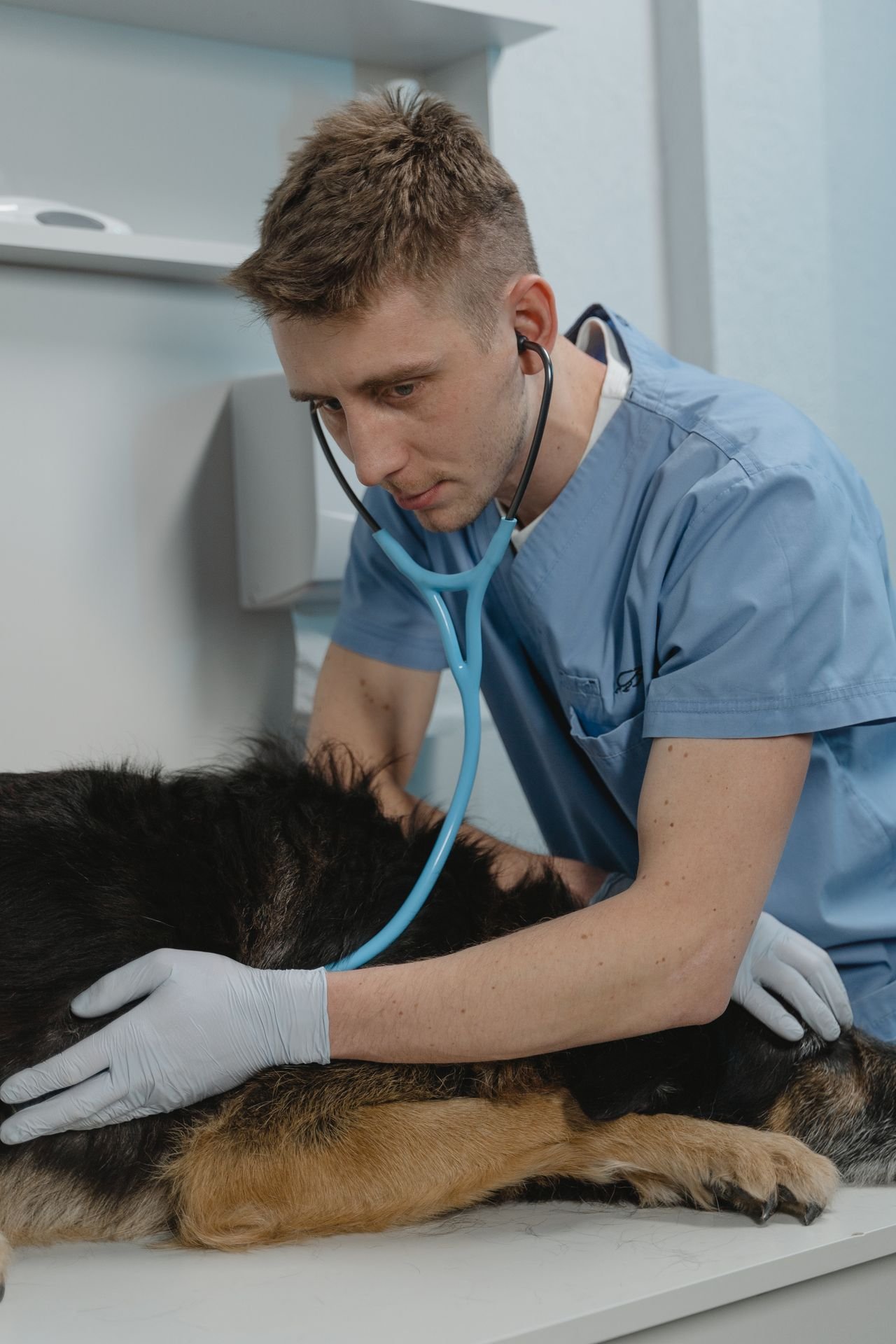
The itch is the part you see. The part you don’t see is what matters most. Heartworm disease is spread only by mosquito bites, and it’s one of the most serious illnesses a dog can catch.
Here’s how it works, according to the FDA’s heartworm fact sheet. A mosquito bites an infected dog, coyote or fox and picks up baby worms. Over about 10 to 14 days they develop inside the mosquito. When it bites your dog, it leaves infective larvae on the skin, which enter through the bite wound. Over roughly 6 to 7 months they grow into adult worms that live in the heart and lungs, and adults can survive 5 to 7 years. Female worms can reach 10 to 12 inches long.
The scary part is how quiet it is. Early on, many dogs show no signs at all. Later you may see:
- A mild, lasting cough
- Getting tired quickly on walks or not wanting to exercise
- Less appetite and weight loss
- Trouble breathing and, in advanced cases, a swollen belly or sudden collapse
And it isn’t a rare, faraway problem. The FDA notes heartworm has been reported in dogs in all 50 states. The American Veterinary Medical Association reported in 2024 that cases have been climbing for nearly two decades, from about 800,000 positive dogs in 2001 to well over 1.2 million around 20 years later, while most dogs still don’t get prevention.
That’s why the fix is so simple compared with the disease. Treating adult heartworms is long, risky and often costs more than $1,000. Preventing them takes one vet-prescribed dose a month (or an injection every 6 or 12 months). The American Kennel Club and the American Heartworm Society recommend:
- Prevention 12 months a year, not just in summer. Missing even one month can leave a gap.
- A heartworm test every 12 months, even for dogs already on prevention.
- A test before starting prevention in dogs 7 months and older, because some preventives can harm a dog that already has adult worms.
Your dog’s yearly checkup is the easy moment to handle both. If you’ve been skipping it, here’s why annual wellness exams matter.
What about West Nile virus and EEE?
Mosquitoes also carry West Nile virus and eastern equine encephalitis (EEE). Dogs can be infected with West Nile, but the UC Davis School of Veterinary Medicine says dogs and cats are far more resistant than people and horses, and it’s very unlikely a healthy dog will get sick. Very young, old or immune-weakened dogs are the ones most at risk, with signs like fever, weakness and muscle spasms. EEE in dogs has been reported only rarely. Neither is a reason to panic, but both are another good reason to cut down on bites.
Mosquito Repellent for Dogs: What’s Safe and What’s Not
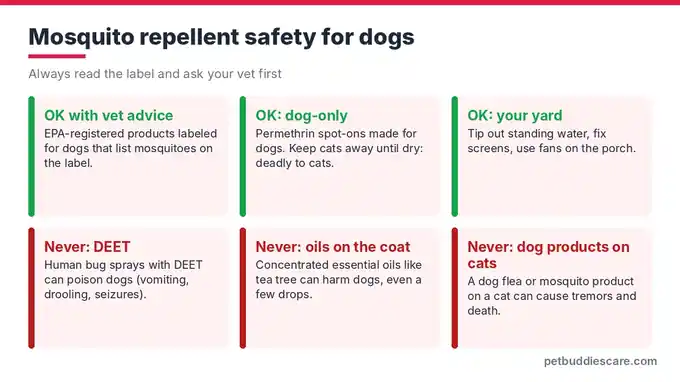
This is where well-meaning owners get into trouble. You grab your own bug spray on the way out the door, give your dog a quick mist, and think you’ve done the right thing. You may have just poisoned them.
| Product | Safe for dogs? | Why |
|---|---|---|
| 🔴 Human sprays with DEET | No | UC Davis vets warn human repellents aren’t approved for pets and can poison them; DEET can cause vomiting, drooling and seizures |
| 🔴 Concentrated essential oils (tea tree and others) on the coat | No | The ASPCA says oils on the skin or fur can cause wobbliness, depression and low body temperature; tea tree can cause problems with as few as 7 or 8 drops |
| 🔴 Rubbing lemon or citrus on the coat | No | Citrus oils can irritate skin and upset the stomach when licked off, with no proof it stops bites |
| 🟡 Permethrin spot-ons made for dogs | Dogs only, as labeled | Repel and kill mosquitoes on dogs, but are highly toxic to cats |
| 🟢 EPA-registered products labeled for dogs that list mosquitoes | Yes, with vet advice | Tested for dogs at the labeled dose and weight |
| 🟢 Prescription heartworm preventive | Yes | Doesn’t stop bites but protects against the most serious disease they spread |
Always match the product to your dog’s weight, read the full label and ask your vet first, especially for puppies, seniors, pregnant dogs and dogs on other medications.
Have a cat in the house? Pay extra attention to that permethrin row. According to PetMD’s guide to flea and tick medicine poisoning in cats, cats can’t break permethrin down, and a cat can be poisoned just by rubbing against or grooming a freshly treated dog. Signs include tremors, twitching, drooling and seizures. Keep cats away from your dog for 24 hours after applying a spot-on, and never use a dog product on a cat.
If your dog does lick, eat or get sprayed with something toxic, call your vet or the ASPCA Animal Poison Control Center at (888) 426-4435. A consultation fee may apply.
How to Prevent Mosquito Bites on Dogs
You can’t make your yard mosquito-free, but you can make your dog a much harder target. Most of these take five minutes:
- Dump standing water every week. Mosquitoes can breed in a bottle cap of water. Tip out flowerpot saucers, buckets, kiddie pools, old tires and toys. Refresh bird baths and outdoor water bowls often, and clear clogged gutters.
- Shift walk times. Many mosquitoes are most active at dawn and dusk. Walk a little later in the morning or earlier in the evening during peak season.
- Fix your screens. Check window and door screens for tears so mosquitoes can’t follow your dog inside.
- Use a fan on the porch. Mosquitoes are weak fliers. A box fan blowing across the spot where your dog hangs out keeps a lot of them away.
- Skip the marsh at sunset. Avoid swampy trails and wet, shady brush during peak hours.
- Use a dog-safe repellent if your vet recommends one, especially for hikes and camping trips.
- Keep heartworm prevention going all year, and keep a calendar reminder so doses never slip.
If you treat your yard, choose a product labeled as pet-safe, follow the directions exactly, and keep your dog inside until it’s dry or for as long as the label says.
✅ Weekly Mosquito Check
- ☐ Tipped out saucers, buckets, toys and kiddie pools
- ☐ Changed bird bath and outdoor water bowl water
- ☐ Checked screens and gutters
- ☐ Heartworm dose given this month
- ☐ Ran fingers over belly, ears and nose for bumps or ticks
Mistakes to Avoid
- Spraying your dog with your own bug spray. Human repellents, especially DEET, aren’t made for dogs.
- Treating bites with essential oils or citrus. They can do more harm than the bite.
- Giving human medicine without asking. Dosing for dogs is different, and some ingredients are dangerous.
- Letting the licking go. One bite plus a day of licking can become an infected hot spot.
- Stopping heartworm prevention in winter. Heartworm has been found in every season, and gaps leave your dog exposed.
- Using dog flea or mosquito products near cats. Permethrin can kill a cat.
Vet bills for allergic reactions and heartworm treatment add up fast. If your dog isn’t covered yet, our breakdown of how much dog insurance costs can help you decide.
Frequently Asked Questions
Can a mosquito bite my dog?
Yes. Mosquitoes bite dogs just like people, usually on thin-haired skin such as the belly, ears, nose and inner legs. Dogs who spend time outside at dawn or dusk, or near standing water, get bitten most.
What does a mosquito bite on a dog look like?
A small, raised, round bump that’s pink or red, usually under a centimeter across. It’s often itchy, so your dog may lick or scratch one spot. On thick or dark coats you may only notice the scratching.
How long do mosquito bites last on dogs?
The itch usually fades within hours and the bump within one to two days. If a bite is still there after about a week, or it’s growing, oozing or smelly, have your vet look at it.
What can I put on my dog’s mosquito bite?
Clean it with mild soap and water and hold a cool, damp cloth on it for 5 to 10 minutes. Don’t use human creams, antihistamines or essential oils unless your vet approves them, since dogs lick off whatever you apply.
Can dogs get heartworm from a mosquito bite?
Yes. Heartworm spreads only through mosquito bites, and one bite from an infected mosquito is enough. Year-round, vet-prescribed prevention and a yearly heartworm test are the best protection.
Is human mosquito spray safe for dogs?
No. Human repellents, especially those with DEET, are not approved for pets and can cause vomiting, drooling and seizures. Use only products labeled for dogs, and ask your vet first.
The Bottom Line
Mosquito bites on dogs are common and almost always minor. A small pink bump, a bit of licking, gone in a day or two. Keep it clean, cool it down, and keep your dog from chewing at it.
The bigger job is protection. Get rid of standing water, use only dog-safe repellents, never reach for your own bug spray, and keep your dog on heartworm prevention every month of the year. Know the emergency signs, and call your vet with any questions about your own dog.
Your next step: put your dog’s yearly heartworm test on the calendar today, and go tip out that flowerpot saucer.
Keep learning: more guides from Pet Buddies Care
- Hiking with dogs: safety tips and gear checklist
- Walking a dog in the rain: tips and safety checks
- Common diseases in dogs, explained
Sources: U.S. Food and Drug Administration (FDA), Facts About Heartworm Disease; American Veterinary Medical Association (AVMA), 2024; American Kennel Club; American Heartworm Society; UC Davis School of Veterinary Medicine; ASPCA and ASPCA Animal Poison Control Center; PetMD; VCA Animal Hospitals. Updated November 2026. This guide is general information, not veterinary advice. Check with your vet about your own dog.
Has your dog ever had a reaction to a bug bite? Share what happened in the comments.