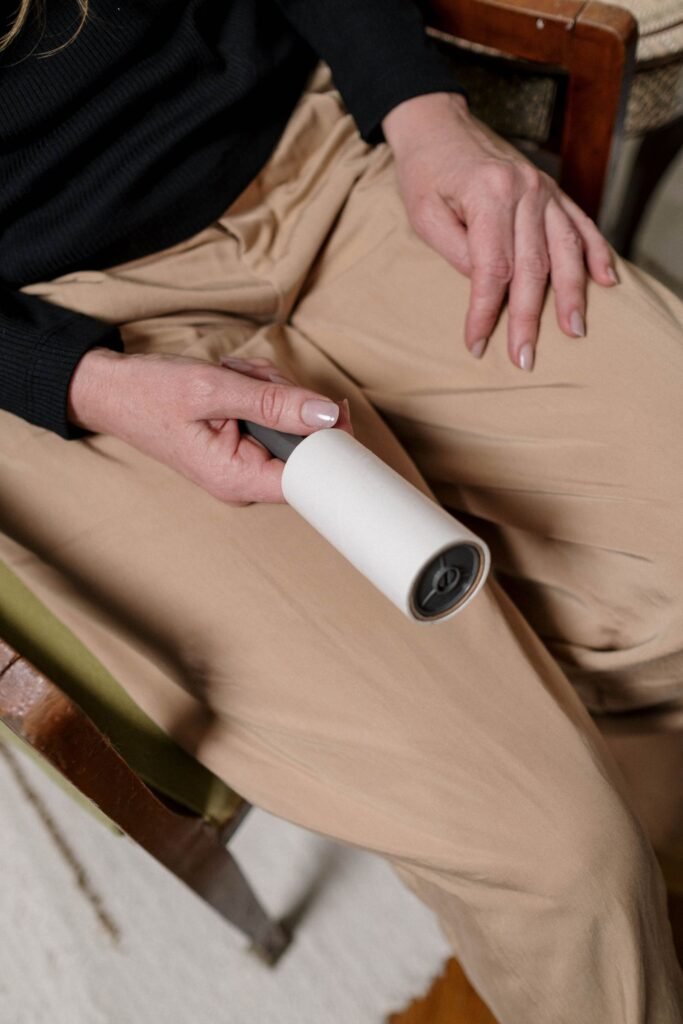
The fastest way to remove pet hair from laundry is to get most of it off before the wash. Tumble the clothes in the dryer on no heat for about 10 minutes, empty the lint screen, then wash. Water makes loose fur clump and cling, so a dry first pass does more than any detergent.
You know the scene. You pull a “clean” black hoodie out of the dryer and it looks like it spent the night on the dog bed. Worse, the next load of towels comes out hairy too, because the fur from the last load stayed in the drum.
This guide fixes both problems. You’ll get an 8-step routine for before, during and after the wash, a fabric-by-fabric tool chart, and a simple care schedule that keeps fur from clogging your washer.
🧺 Quick Answer: How to Remove Pet Hair From Laundry
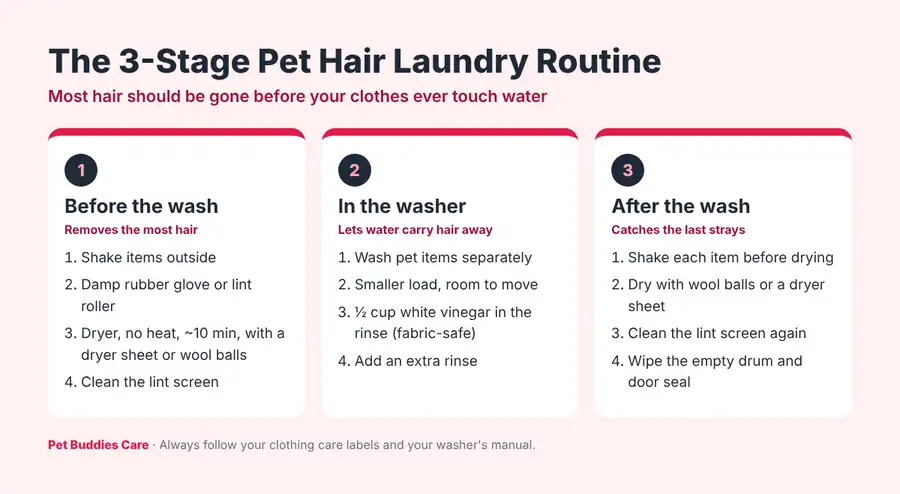
- Before washing: shake items outside, wipe with a damp rubber glove or lint roller, then tumble 10 minutes on no heat with a dryer sheet or wool dryer balls.
- In the washer: wash pet items separately, use a smaller load and add an extra rinse. Some owners add ½ cup of white vinegar to the rinse.
- After washing: shake each item, dry with wool balls or a dryer sheet, and clean the lint screen again.
- Protect the machine: wipe hair out of the empty drum and run an empty cleaning cycle every few weeks.
In this guide
Why Pet Hair Sticks to Laundry
Pet hair sticks for two reasons: static and texture. Dry fabric builds a static charge that pulls fine hairs in. And knits, fleece and microfiber have loops and fuzz that hairs weave into, a bit like Velcro.
Here’s the catch most people miss. Water doesn’t wash fur away. As Consumer Reports explained, “when you mix water and pet hair, it clumps.” Those wet clumps glue themselves back onto your clothes, collect in the drum, and can end up in the drain pump.
That’s why the whole routine below is built around one idea: get the hair off while everything is still dry, and let the dryer’s lint screen do the heavy lifting.
How to Remove Pet Hair From Laundry in 8 Steps
Think of it as three stages. Steps 1 to 4 happen before the wash, steps 5 and 6 in the washer, and steps 7 and 8 after. If you’re short on time, steps 3 and 8 alone will make a big difference.
Step 1: Shake everything out (outside if you can)
Take the pile to the porch or balcony and give each piece a few hard snaps. It sounds too simple, but a throw blanket from the couch can drop a surprising amount of loose fur in 30 seconds. Doing it outdoors keeps that fur off your floor.
Step 2: Wipe with a damp rubber glove or a lint roller
Put on a dish glove, dampen it slightly and sweep your hand across the fabric in one direction. The rubber grabs hair and rolls it into little clumps you can pick off. Consumer Reports suggests this same damp-glove trick. For dress pants or a wool coat, use a lint roller or a strip of packing tape instead, with light pressure.
Got a lot of furniture-style fabric, like a fleece throw? A rubber pet hair brush works the same way on a bigger surface. We sell a pet hair removal brush made for exactly this, but any rubber-bristle brush will do the job.
Step 3: Tumble on no heat for about 10 minutes
This is the step that changes everything. Put the dry, hairy clothes in the dryer with a dryer sheet or two or three wool dryer balls and run the air-only or no-heat setting. Maytag’s pet hair guide calls this “dry, wash and dry” and says to start checking “after about 10 minutes.”
The tumbling shakes fur loose, the dryer sheet or wool balls cut static, and the airflow pulls hair onto the lint screen. Picture a Husky owner in spring: one 10-minute tumble of the family’s sweatshirts can leave a lint screen that looks like a small gray pet.
Step 4: Clean the lint screen
Pull the screen and peel off the mat of fur before you go any further. If you skip this, the hair just waits there for your next load. A full screen also slows drying.
Step 5: Wash smart: separate, smaller loads
Now the clothes go in the washer. A few settings help water carry the remaining hair away instead of re-depositing it:
- Wash pet items on their own. Dog towels, crate blankets and bed covers never go in with your work clothes.
- Don’t overload. Clothes need room to move so hair can rinse out. The detergent brand all® gives the same advice in its pet hair laundry tips.
- Use the temperature your care label allows. Water temperature matters far less than getting hair off first.
- Turn on a pet or allergen setting if your washer has one. Some newer machines add extra water and a deeper rinse for pet hair.
Step 6: Add an extra rinse (and maybe vinegar)
An extra rinse gives loose hair one more chance to leave with the water. Many owners also add ½ cup of plain white vinegar to the rinse, a tip Dogster recommends. Vinegar softens fabric and cuts static, which helps hair let go. Never mix vinegar with bleach, and check your washer manual first, since some makers advise against regular vinegar use.
What about fabric softener? It reduces static too, so it can help on clothes and sheets. Skip it on towels and workout gear, where it can reduce absorbency.
Step 7: Shake again, then dry with wool balls or a dryer sheet
Before the wet clothes go into the dryer, give each one a quick shake over the washer. Then dry as usual with wool balls or a dryer sheet. Wet clumps that survived the wash usually let go once the fabric dries and tumbles.
Step 8: Clean the lint screen again and do a final roll
Empty the lint screen one more time. Then give anything dark or fuzzy a final pass with a lint roller as you fold. Two minutes here means you don’t head out the door covered in cat hair.
Now that the routine is clear, let’s match the right tool to the right fabric, because a wool sweater needs gentler handling than a pair of jeans.
Best Pet Hair Tool for Each Fabric
Pick the gentlest tool that still lifts the hair. Rubbing hard on knits causes pilling, and heat can shrink wool.
| Fabric | Best first tool | No-heat pre-tumble? | Go easy on |
|---|---|---|---|
| 👕 Cotton tees, jeans | Damp rubber glove | ✅ Yes | Nothing special |
| 🧥 Fleece, sweatshirts | Rubber glove, then lint roller | ✅ Yes | Stiff brushes (pilling) |
| 🧶 Wool, knits | Lint roller, light pressure | ⚠️ Check the care label | Heat and rubbing |
| 👗 Delicates, silk | Lint roller or tape | ❌ Usually not | Gloves and brushes |
| 🛁 Towels, blankets | Shake outside, then glove | ✅ Yes | Fabric softener on towels |
| 🐕 Pet beds, covers | Vacuum, then glove | ✅ Yes | Washing with your clothes |
General guidance. Your garment’s care label always comes first.
Which fabrics are the real hair magnets? Fleece, velvet, corduroy and microfiber. If your cat sleeps on your clothes chair, keep those fabrics in a closet or a lidded hamper.
As an Amazon Associate, we earn from qualifying purchases. Prices and availability can change.
The easiest add-on for the washer and dryer: reusable pet hair catchers. Toss them in with the load:

- PET HAIR REPELLING DRYER SHEETS: Bounce dryer sheets have 3x more pet hair repelling power vs. Bounce dryer sheets
- PERFUME-FREE FOR SENSITIVE SKIN: These fabric softener sheets are free of perfumes, ideal dryer sheets for households wi…
- WRINKLE AND STATIC REDUCTION: Bounce dryer sheets help reduce wrinkles and dryer anti static cling while adding a touch …

- Pet Hair Remover Laundry Balls: Designed for homes with shedding dogs and cats, these laundry balls help catch loose pet…
- 12PCS for Better Coverage: This 12-piece pet hair catcher set provides multiple balls for each load. Use several togethe…
- Washer & Dryer Compatibility: Use these reusable pet hair remover balls in front-load, top-load, and HE washing machines…
How to Wash Pet Bedding and Blankets
Pet bedding is where most washer clogs start. A single dog bed cover can hold more fur than a week of your clothes, so it gets its own routine:
- Vacuum it first with an upholstery tool, then wipe with a damp rubber glove.
- Tumble it dry on no heat for about 10 minutes and empty the lint screen. Hepper suggests the same dryer-first step for bedding.
- Wash it alone, following the bed’s label. Use an extra rinse.
- Wipe the empty drum before your next load of clothes goes in.
- Dry and check the lint screen halfway through. Thick beds can fill it fast.
Washing every week or two is a good rhythm for most beds and blankets. If you’ve been walking your dog in the rain, muddy towels add grit to the fur, so give them a separate wash too.
No Dryer? How to Get Pet Hair Off Clothes
Live in an apartment with a shared laundry room, or line-dry everything? You can still get great results. You just do more of the work by hand.
- Do steps 1 and 2 thoroughly. The glove and lint roller replace the dryer tumble.
- Mist a fuzzy item lightly with water or an anti-static spray, then wipe with the glove. A little moisture breaks the static without making the fur clump.
- Add an extra rinse, then shake each item hard before hanging it.
- Once dry, give it a final lint roll. Dry fabric releases hair much more easily than damp fabric.
Using a laundromat? Be a good neighbor: wipe the drum after your pet load. The next person will thank you.
How to Clean Pet Hair Out of Your Washer and Dryer
If your towels keep coming out hairy even after you’ve changed your routine, the hair is probably living in the machine. Consumer Reports warns that clumps of wet fur can clog drain holes and the drain pump, which is a repair nobody wants.
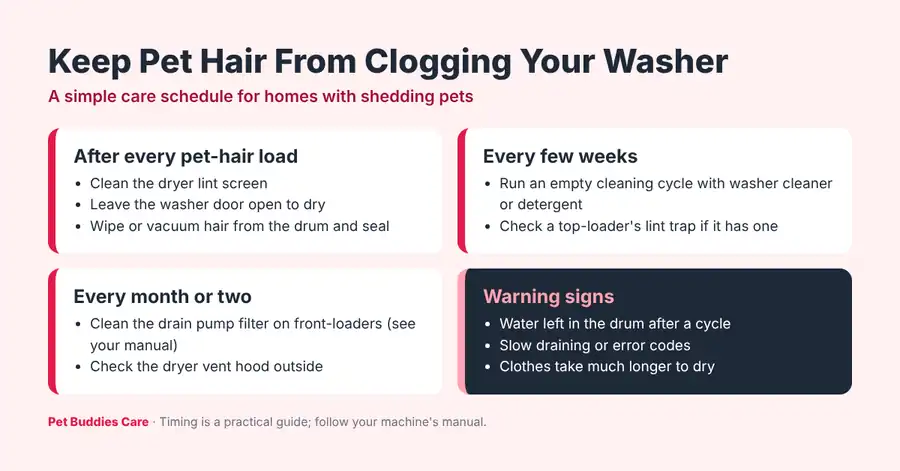
- Let the drum dry. Leave the door open after the last load. Dry hair is much easier to remove.
- Wipe or vacuum the drum and door seal. Use a microfiber cloth or a vacuum with a soft brush tool, and check the folds of a front-loader’s rubber gasket.
- Run an empty cleaning cycle. Use your machine’s clean cycle with a washer cleaner, or a small amount of detergent.
- Clean the drain pump filter on front-loaders. It’s usually behind a small panel at the bottom front. Put down a towel and a shallow pan first, and follow your manual.
- Check the dryer lint screen and vent. Clean the screen every load, and check the outside vent hood for fuzz now and then.
✅ Signs your washer needs a hair clean-out
- ☐ Water left in the drum after a cycle
- ☐ Slow draining or a drain error code
- ☐ Clean towels come out with hair on them
- ☐ Loads take much longer than normal to dry
Mistakes to Avoid
- Washing first, de-hairing later. Water turns loose fur into sticky clumps. Always do the dry steps first.
- Mixing pet bedding with your clothes. The hair simply moves from the bed to your shirts.
- Stuffing the drum. Overloaded washers can’t rinse hair out.
- Forgetting the lint screen. A full screen means hair lands back on your clothes, and slower drying.
- Using heat on delicate knits. No-heat only, and only if the label allows tumbling.
- Mixing vinegar and bleach. Never combine them in the same load.
Keep Less Hair From Reaching the Laundry
The easiest hair to wash out is the hair that never got on your clothes. A few habits make laundry day much lighter:
- Brush your pet often, outdoors when you can, and daily in shedding season. Consumer Reports names daily brushing as the first line of defense.
- Use washable throws on your pet’s favorite couch spot and bed corner, and shake them out a few times a week.
- Keep clean clothes covered. Lidded hampers and closed closets stop cats from napping on fresh laundry.
- Tackle the rest of the house. Our room-by-room guide on how to remove pet hair from your home covers furniture and floors, and we have dedicated guides for getting pet hair out of carpet and getting pet hair out of your car.

Frequently Asked Questions
Can pet hair ruin a washing machine?
It can cause problems. Wet pet hair clumps and can clog drain holes and the drain pump, leading to slow draining or standing water. De-hair laundry before washing, wipe the empty drum and clean the pump filter on front-loaders as your manual directs.
What dissolves dog hair in the washing machine?
Nothing in a normal wash dissolves dog or cat hair. Products help hair release from fabric so it can rinse away or be caught by a filter or lint screen. The most effective step is removing loose hair before the wash with a no-heat dryer tumble.
Does vinegar help remove pet hair in the wash?
It can help. Adding about ½ cup of white vinegar to the rinse softens fabric and reduces static, so hair lets go more easily. Never mix vinegar with bleach, and check your washer’s manual before using it regularly.
Do dryer sheets or wool dryer balls remove pet hair?
Yes, they help. Both reduce static and help the dryer pull loose hair onto the lint screen. Use them during a 10-minute no-heat tumble before washing and again when drying.
Should I wash pet bedding with my clothes?
No. Pet bedding holds a lot of fur that spreads to everything else in the load. Wash it on its own, then wipe out the empty drum before washing clothes.
How do I get pet hair off clothes without a dryer?
Use a damp rubber glove or lint roller on dry fabric, add an extra rinse to the wash, shake each item before hanging it, and give it a final lint roll once dry.
The Bottom Line
Removing pet hair from laundry is mostly about timing. Get the fur off while everything is dry, with a shake, a damp glove and a 10-minute no-heat tumble. Then wash pet items separately in roomy loads, and clean the lint screen every time.
Add a quick drum wipe and an occasional cleaning cycle, and your washer stays healthy too. Try the full routine on your next load of hairy hoodies. We think you’ll notice the difference on the very first wash.
Keep learning: more guides from Pet Buddies Care
- How to remove pet hair from your home: 15 room-by-room tips
- How to get pet hair out of carpet: 9 methods that work
- How to get pet hair out of your car
Sources: Consumer Reports (via NBC 7 San Diego); Maytag; all® laundry; Dogster; Hepper. Updated November 2026. Always follow your clothing care labels and your washer’s manual.
What’s your best pet hair laundry trick? Share it in the comments.