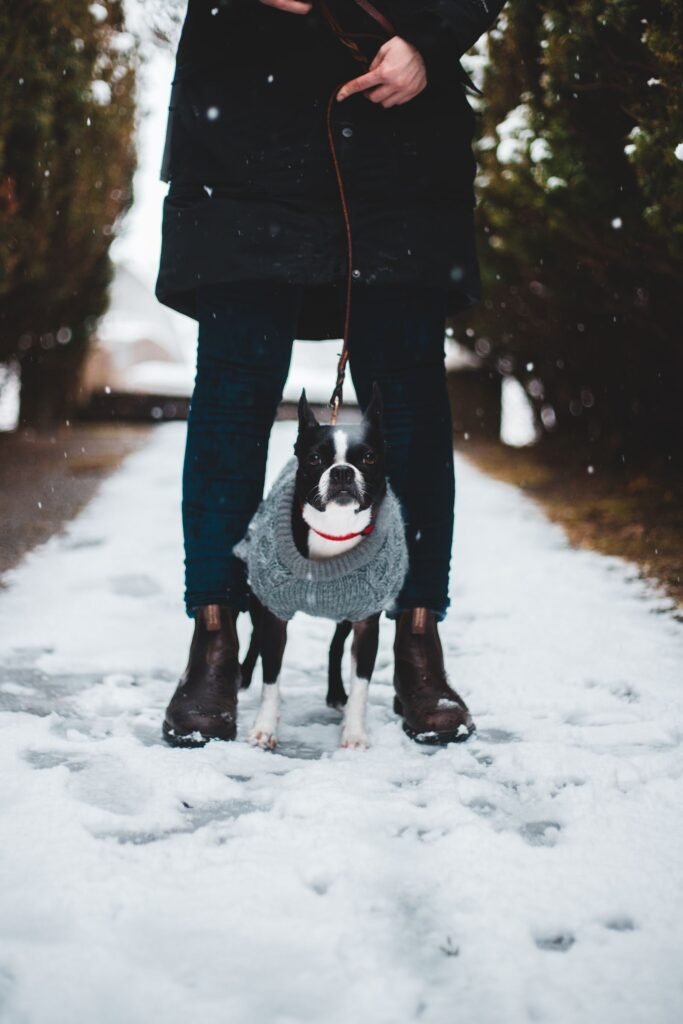
Want to know how to keep pets warm in winter without guessing? Start with three things: a dry, draft-free bed off the floor, shorter outings when it drops below freezing, and a quick paw wipe every time you come back inside. Most cold-weather trouble starts when one of those slips.
Picture a January morning. Your short-haired dog is shivering at the door, the cat has disappeared under the duvet, and the rabbit’s water bottle has a skin of ice on it. Each of them is telling you something different, and each needs a slightly different fix. Below you’ll find a simple temperature chart, the warning signs vets watch for, and 15 practical ways to keep dogs, cats and small pets warm and safe all season.
This post contains affiliate links. We may earn a small commission at no extra cost to you. See our disclosure.
❄️ Quick Answer: How to Keep Pets Warm in Winter
- Indoors: a raised, padded bed away from doors, windows and tile floors, plus a blanket or covered bed to burrow into.
- Outdoors: short walks below 32°F for small, thin-coated, young or old dogs; everyone gets short potty breaks below 20°F.
- Gear: a coat for dogs that need one, booties or paw balm on salted streets, and a towel by the door.
- Safety: wipe off ice melt, clean up antifreeze, never leave pets in a cold car, and bring small pets indoors.
- Shivering, weakness or pale skin? Warm your pet slowly and call your vet.
In this guide
How Cold Is Too Cold for Pets?
There’s no single number that fits every pet. A husky and a Chihuahua live in different worlds, even on the same sidewalk. Still, vets use a few rough lines. PetMD’s cold-weather guide says most dogs are fine above 45°F, small or thin-coated dogs can get into trouble below 32°F, and below 20°F any dog left out too long can develop hypothermia or frostbite.
Use the “feels like” temperature, not the number on your phone’s home screen. Wind, wet fur and cloudy, damp days all make cold hit harder. The ASPCA’s cold weather tips sum it up neatly: if it’s too cold for you, it’s probably too cold for your pet.
| Feels-like temperature | Small, thin-coated, young, senior or sick dogs | Healthy, thick-coated dogs | Cats and small pets |
|---|---|---|---|
| 🟢 Above 45°F | Normal walks; sweater if they shiver | Normal walks and play | Indoors; no changes needed |
| 🟡 32–45°F | Coat on, shorter walks | Normal, watch for wet fur | Rabbits and guinea pigs belong inside |
| 🟠 20–32°F | Brief walks only, coat and booties | Shorter outings, dry off after | Cats indoors; small pets in a warm room |
| 🔴 Below 20°F | Quick potty breaks, then straight in | 15–20 minute sessions, then warm up | Indoors only |
Dog ranges from PetMD and AKC guidance. Small-pet guidance from RSPCA advice. Your vet knows your pet best.
That last row comes from the American Kennel Club, which suggests keeping play to 15 to 20 minute stretches when the wind chill is below 20 degrees, then heading in to warm up. So what does “too cold” actually look like on your own pet? Here’s what to watch for.
Signs Your Pet Is Too Cold
Pets tell you they’re cold long before it becomes an emergency. Shivering, whining, slowing down, tucking the tail, looking for shelter or lifting one paw after another off the snow are all early signs. When you see them, it’s time to go inside.
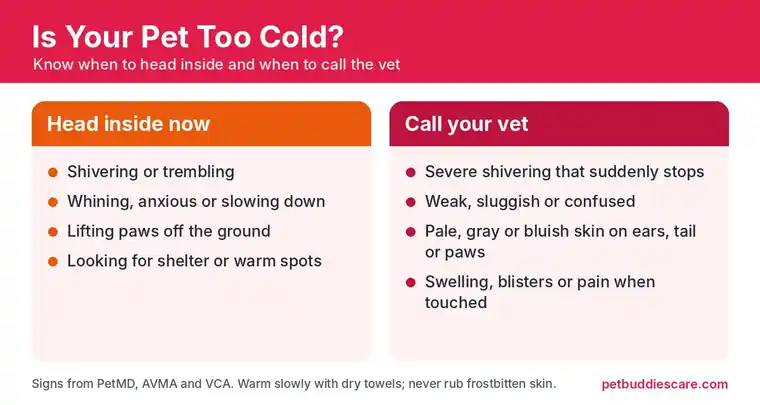
Here’s the catch: severe shivering that suddenly stops isn’t a good sign. As hypothermia gets worse, the body can stop shivering. Weakness, confusion or a pet that’s sluggish and hard to rouse needs a vet. The AVMA’s cold weather safety sheet says to call your vet if your pet is shivering hard or very lethargic after time in the cold.
Frostbite is sneakier. It usually hits the ears, tail and paws, and wet dogs are at higher risk. According to VCA Animal Hospitals, the skin can look pale, gray or bluish and feel cold or brittle, then turn red, swollen and painful as it thaws. Blisters or darkening skin can show up days later.
What to do if your pet got too cold
- Get inside to a warm, dry room.
- Dry and wrap your pet in dry towels or blankets. Towels warmed in the dryer help.
- Warm slowly. Don’t use a hair dryer, heating pad or hot water directly on the skin, and never rub frostbitten areas.
- Call your vet, especially if your pet is weak, confused or has pale, swollen or blistered skin.
- Skip human pain pills. VCA warns that common ones like acetaminophen and aspirin can be toxic to dogs.
It’s smart to know the basics before you need them. Our guide to pet first aid essentials covers what to keep in a kit. Now that you know the warning signs, let’s look at how to stop them from showing up in the first place.
How to Keep Pets Warm Indoors (Tips 1–5)
Most pets spend 20-plus hours a day inside in winter, so this is where you get the biggest win for the least effort.
1. Lift the bed off the floor
Cold sinks. A bed on tile, a basement slab or a spot near the back door can be several degrees colder than the couch. Move beds to a carpeted spot away from doors, windows and vents that blow cold air, or use a raised bed with a thick pad. Seniors with stiff joints will thank you.
2. Give them something to burrow into
Cats and small dogs love a covered or “cave” bed, or simply a fleece blanket they can dig under. Two beds in different rooms let your pet pick the warmest spot as the sun moves.
3. Keep the house steady, not hot
If you drop the thermostat a lot while you’re at work, think about who’s home. A thin-coated whippet or a 15-year-old cat feels a 58°F house far more than you do in your sweater. A few degrees warmer during the day, or a warm room with the door open, makes a real difference.
4. Use heaters and heat pads safely
Space heaters and fireplaces are magnets for pets. Use a guard or screen, keep cords out of chewing range, and switch heaters off when you leave the house, as RSPCA Victoria advises. If you use a heated pet pad, choose one made for pets, set it on low, and make sure your pet can move off it. Pets with arthritis or thin skin may not shift away when it gets too warm.
5. Keep them moving indoors
Shorter walks mean less exercise, and bored, stiff pets pile on weight. Ten minutes of tug, a snuffle mat or a hallway game of fetch keeps muscles warm. For cats, a few short wand-toy sessions a day do the job; our list of interactive cat toys for indoor cats has ideas. Inside is covered. Next comes the part most dogs can’t skip: going out.
Keeping Dogs Warm on Winter Walks (Tips 6–9)
6. Put a coat on the dogs who need one
Not every dog needs a coat, but plenty do. The AKC says toy and small breeds, hairless and clipped dogs, short-legged dogs whose bellies brush the snow, and lean, short-coated breeds like greyhounds tend to need one sooner. Seniors and dogs with arthritis often benefit too. The ASPCA suggests a coat that covers from the neck to the base of the tail and the belly. Not sure about fit? Our guide on how to choose a dog winter coat walks through sizing.
7. Protect the paws
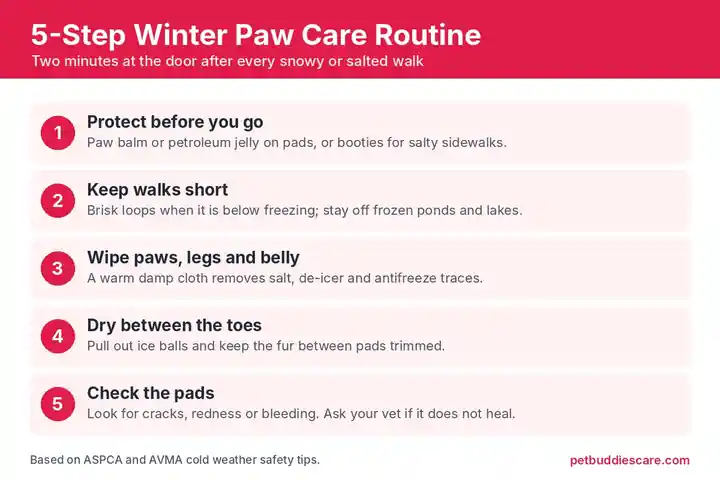
Salt and de-icers sting cracked pads, and dogs lick them off later. Rub a vet-approved paw balm or petroleum jelly on pads before you go, or use booties on heavily salted streets. Then follow the routine below every time you come in.
8. Go shorter, more often
Three 10-minute loops beat one 40-minute march in the cold. Walk in the warmest part of the day, keep your dog on leash on snow and ice (dogs lose their scent trail and get lost more easily), and stay off frozen ponds. Cold rain is just as chilling as snow; our guide to walking a dog in the rain covers when to go and when to stay in.
9. Dry off and don’t shave down
Wet fur loses heat fast. Towel your dog off after every walk, including the belly and between the toes. Keep up with brushing so the coat stays fluffy and insulating, and skip the close shave until spring. The ASPCA warns against shaving dogs down to the skin in winter.
How to Keep Cats Warm in Winter (Tips 10–11)
10. Keep your cat indoors and check the car
Indoor cats are the safest cats in winter. Outdoor and neighborhood cats often curl up next to a warm engine. Before you drive, knock on the hood, honk the horn and check under the car. The AVMA recommends exactly this. It takes five seconds and saves lives every winter.
11. Build a dry shelter for outdoor or community cats
If you care for cats that live outside, give them a small, insulated shelter raised off the ground, with a door just big enough for a cat and facing away from the wind. Fill it with loose straw, not towels or blankets, which soak up moisture and freeze. Small is better: a snug box holds body heat. And check the water bowl twice a day.
Keeping Rabbits and Small Pets Warm (Tips 12–13)
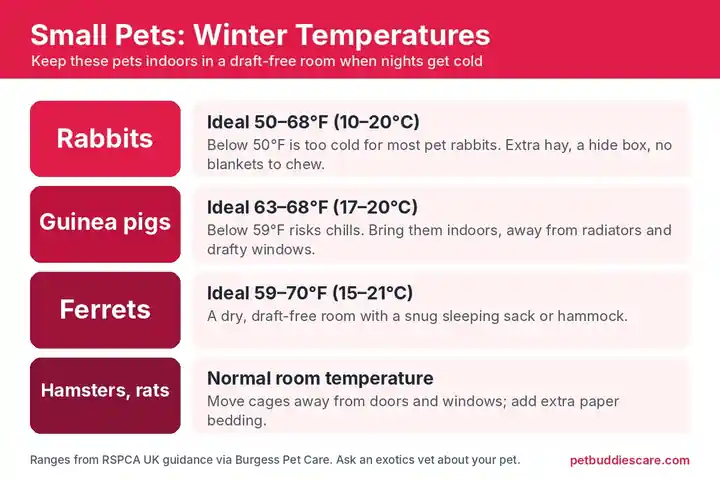
Small pets lose heat fast and can’t put on a sweater. The safest move for most is a spot inside the house. Guidance from the RSPCA, summarized by Burgess Pet Care, puts the comfort zone for rabbits at about 50–68°F and for guinea pigs at about 63–68°F.
12. Move hutches and cages to a draft-free room
Bring outdoor hutches into the house or at least into a shed or garage that never freezes and has no car fumes. Indoors, keep cages away from radiators, drafty windows and outside doors. Sudden overnight drops are what catch owners out.
13. Add hay, hides and unfrozen water
Give extra hay or straw for burrowing and a hide box to sleep in. Skip fleece blankets for rabbits, since chewed fabric can cause a blockage. Check water bottles several times a day, and never feed frosty greens. For a full setup, see our guide on how to care for a pet bunny rabbit.
Winter Food and Water (Tip 14)
Pets burn a little more energy staying warm, especially working dogs and pets that spend time outside, so the ASPCA suggests feeding a bit extra in winter. Indoor couch potatoes usually move less, though, so for them more food can mean extra pounds. Ask your vet before changing portions, and keep fresh water available at all times.

Metal bowls can freeze fast and stick to tongues outside, so use plastic or a heated bowl made for pets if water sits outdoors.
Winter Hazards to Watch (Tip 15)
Keeping pets warm is only half the job. Winter also brings a few dangers that have nothing to do with temperature.
✅ Winter Safety Checklist
- ☐ Clean up antifreeze drips right away; consider propylene glycol products, which the ASPCA notes are safer than ethylene glycol
- ☐ Use pet-safe ice melt on your own steps and driveway
- ☐ Wipe paws, legs and belly after every walk so pets don’t lick off chemicals
- ☐ Never leave a pet alone in a car; the ASPCA says cars act like refrigerators in winter
- ☐ Keep dogs leashed near frozen ponds and lakes
- ☐ Check that ID tags and microchip details are up to date
- ☐ Save the ASPCA Animal Poison Control number: (888) 426-4435 (a fee may apply)
Pets Who Need Extra Care in Winter
Some pets feel the cold more than others. Puppies, seniors and sick pets don’t regulate body temperature as well, according to PetMD. Here’s who to keep a closer eye on.
| Pet | Why they get cold | What helps |
|---|---|---|
| 🐶 Puppies and kittens | Small bodies, still learning to regulate heat | Warm room, short outings, extra bedding |
| 🦴 Seniors and pets with arthritis | Cold stiffens joints; less muscle | Raised padded bed, coat, gentle walks; ask your vet about pain |
| 🐕 Toy, thin-coated and hairless dogs | Little fur or body fat | Coat and booties, very short walks below freezing |
| 💊 Pets with heart disease, diabetes or kidney disease | Poorer blood flow and body-heat control | Stay indoors; ask your vet about limits |
| 🐰 Rabbits, guinea pigs, ferrets | Small size, often housed outdoors | Move indoors, deep hay, no drafts |
Winter is also a good time for a check-up, since cold can make hidden joint or heart problems show. Our post on annual wellness exams for pets explains what the vet looks at.
Winter Gear Worth Having
You don’t need a closet full of pet clothes. For most homes, three things cover it: a coat that fits (neck to tail, belly covered, room to move), booties or paw balm for salted streets, and a warm bed with a washable cover. Here are a few options readers ask about. Check the size chart carefully before you order.

- PERFECT FIT FOR EVERY DOG:Our FUAMEY dog winter jacket is thoughtfully crafted in 7 distinct sizes to ensure a custom fi…
- ALL-WEATHER PROTECTION & SUPERIOR WARMTH:FUAMEY warm dog jackets are engineered to withstand harsh conditions. This wint…
- SAFE & VISIBLE IN LOW LIGHT:Safety is a priority with reflective dog coat detailing strategically placed on the back of …

- SIZE MATTERS: 2.1" – 2.6" paw width for Size Medium. Please make sure to measure your dog's paws & reference our size ch…
- WINTER-READY WARMTH: Step into dog winter boots season with confidence. TigerToes outdoor booties for dogs paws keep paw…
- ALL-SEASON PAW PROTECTION: more versatile than just dog snow boots. Water-resistant neoprene ensures comfort and safety …

- SLEEP SURFACE: The main sleep surface and blanket interior are lined with plush berber fabric, while the exterior is wra…
- EASY ON JOINTS: The egg-crate orthopedic foam mattress helps cushion pressure points and improve air circulation to ease…
- PRODUCT DETAILS: Gray; Large, 36" x 27" x 3"
Mistakes to Avoid
- Assuming fur is enough. A thick coat helps, but wet fur, wind and age change everything.
- Leaving pets in the car “for a minute”. A parked car cools down fast in winter.
- Putting a coat on a wet dog. Dry first, then dress.
- Blankets in outdoor shelters. They hold water and freeze. Use straw.
- Heating pads on high or under a pet that can’t move away. Low settings and an escape route, always.
- Forgetting the paws. Salt burns are one of the most common winter complaints, and the fix takes two minutes.
Frequently Asked Questions
How can I tell if my pet is too cold?
Shivering, whining, a hunched back, tucked tail, slowing down, looking for warm spots or lifting paws off the ground are early signs. Weakness, confusion, or pale, gray or swollen skin on the ears, tail or paws are reasons to call your vet.
How cold is too cold for a dog to be outside?
Most dogs are comfortable above 45°F. Below 32°F, small, thin-coated, young, senior and sick dogs need short outings and a coat. Below 20°F, any dog can develop hypothermia or frostbite with long exposure, so keep outings brief.
Are certain breeds more sensitive to the cold?
Yes. Toy and small breeds, hairless or clipped dogs, short-legged dogs and lean, short-coated breeds like greyhounds and whippets feel the cold sooner. Very young, old and sick pets of any breed are also more vulnerable.
Do indoor cats get cold in winter?
They can, especially seniors, thin cats and hairless breeds, or in drafty homes kept cool during the day. A covered bed off the floor, a blanket to burrow into and a sunny window perch help.
Can pets wear sweaters in winter?
Yes. Sweaters and coats help dogs that get cold easily. Choose one that covers the neck to the base of the tail and the belly, fits snugly without rubbing, and is dry before your dog wears it.
Is it safe to use a heating pad for my pet?
Use only heated pads made for pets, on a low setting, and make sure your pet can move off it. Never use a heating pad on a pet that is very cold or frostbitten, and check with your vet for pets with arthritis or thin skin.
The Bottom Line
Keeping pets warm in winter comes down to a few habits: a dry bed off the floor, shorter walks when it’s below freezing, a coat for the dogs who need one, paws wiped after every outing, and small pets moved indoors. Learn the warning signs, keep antifreeze and ice melt out of reach, and call your vet if your pet seems weak, confused or has pale or swollen skin.
Pick one change to make today. Moving the bed away from the back door is a great place to start.
Keep learning: more guides from Pet Buddies Care
- How to choose a dog winter coat: sizing, materials and top picks
- Walking a dog in the rain: safety tips and gear
- How to care for a pet bunny rabbit
Sources: ASPCA Cold Weather Safety Tips; American Veterinary Medical Association (AVMA) Cold Weather Pet Safety; American Kennel Club; PetMD; VCA Animal Hospitals (frostbite in dogs); RSPCA Victoria; RSPCA guidance via Burgess Pet Care. Updated November 2026. This guide is general information, not veterinary advice. Check with your vet about your own pet.
How do you keep your pets cozy when the temperature drops? Share your best tip in the comments.