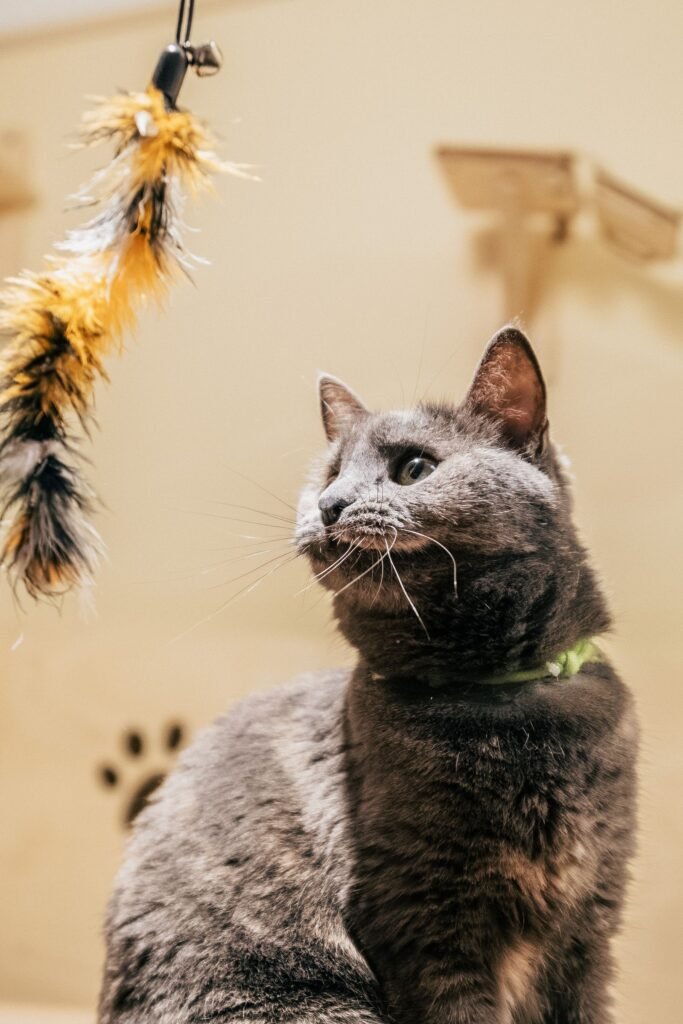
The best interactive cat toys for indoor cats let your cat stalk, chase, pounce and “catch” something, because that hunting routine is exactly what an indoor life is missing. Your cat has food, warmth and safety. What she doesn’t have is anything to hunt. The right toy, used the right way, helps with boredom, weight and the 3 a.m. zoomies.
Maybe you know the scene. You spent good money on a toy, your cat sniffed it once and went back to batting your phone charger off the nightstand. That usually isn’t the toy’s fault. It’s how the toy moves and how the game ends. Below you’ll find five interactive toys worth a look, how much play your cat really needs, the five-step hunt that makes play satisfying, and the safety rules that keep it from ending at the emergency vet.
🐱 Quick Answer: Interactive Cat Toys for Indoor Cats
- Play two or three 10–15 minute sessions a day. That’s the general guide from the American Animal Hospital Association (AAHA).
- Use a wand toy for bonding and an electronic or puzzle toy for solo time. Most cats do best with both.
- Move toys like prey, in short bursts away from your cat, and always let her catch it at the end.
- Finish with food. A treat or her meal completes the hunt-catch-eat cycle.
- Put string toys away after every session. String is the No. 1 foreign-body emergency in cats.
This article contains affiliate links. We may earn a commission if you buy through them, at no extra cost to you. See our Disclosure. Features and prices change, so check the current listing before you buy.
In this guide
- Why indoor cats need interactive toys
- How much play does an indoor cat need?
- How to play: the 5-step hunt
- Types of interactive cat toys compared
- What to look for in an interactive toy
- The 5 best interactive cat toys for indoor cats
- Cat toy safety: the string problem
- Keep your cat interested
- Mistakes to avoid
- FAQ
Why Indoor Cats Need Interactive Toys
Indoor cats need interactive toys because play is how they act out hunting, and hunting is hard-wired. Feline experts at the American Association of Feline Practitioners and International Society of Feline Medicine list “opportunity for play and predatory behavior” as one of five core needs for a healthy cat environment, according to the AVMA’s summary of the feline environmental needs guidelines. The other four are a safe place, separate key resources, kind and predictable human contact, and respect for the cat’s sense of smell.
Picture a 3-year-old indoor tabby who sleeps all day while you work. By evening she’s full of energy with nowhere to put it, so she ambushes your ankles, knocks things off shelves and races the hallway at midnight. That isn’t a bad cat. That’s a hunter with no hunt. A good play routine often calms these habits down, and our guide to common cat behavior problems shows how boredom can look.
How Much Play Does an Indoor Cat Need?
Most indoor cats need about two or three play sessions of 10 to 15 minutes each day. That’s the average the AAHA recommends, adjusted for age and energy. AAHA also notes that cats lose interest when a session runs too long, so short bursts beat one long marathon. PetMD agrees, and suggests puzzle or treat toys for the hours you’re away.
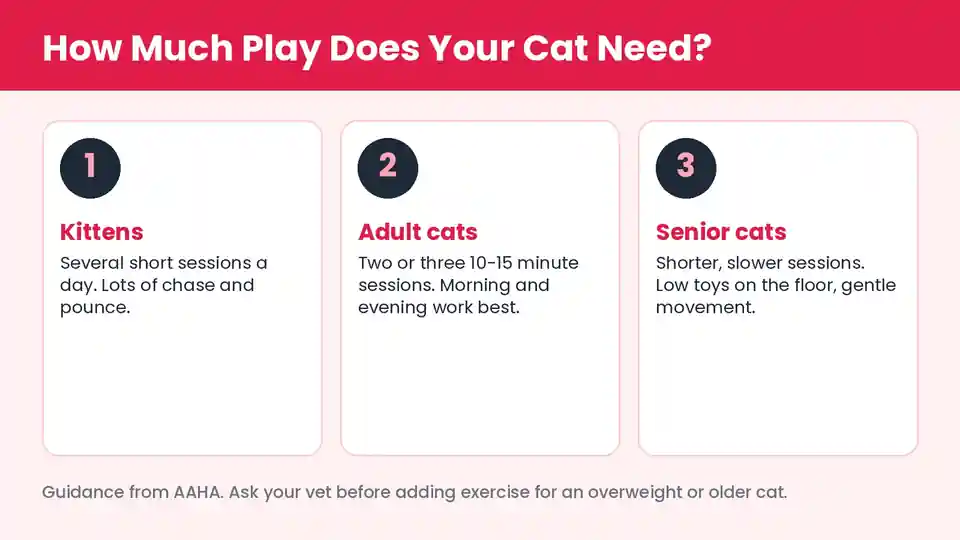
| Cat | Sessions a day | Style of play |
|---|---|---|
| 🐾 Kitten | Several short ones | Fast chase, pounce, lots of variety |
| 🐈 Adult cat | 2–3 sessions of 10–15 min | Full hunt with a wand, plus solo toys |
| 🐈⬛ Senior cat | Shorter, gentler sessions | Slow movement, toys low on the floor |
Based on AAHA play guidance. Rover suggests about 30 minutes a day in total, which lands in the same range.
Timing matters too. AAHA says morning and evening sessions work best, and a play session before bed is a great idea. That’s the trick for the 3 a.m. zoomies: tire her out at 10 p.m., feed her, and she’s far more likely to sleep through. If she’s a night owl, our explainer on how cat night vision works shows why dusk is prime hunting time.
How to Play With Your Cat: The 5-Step Hunt
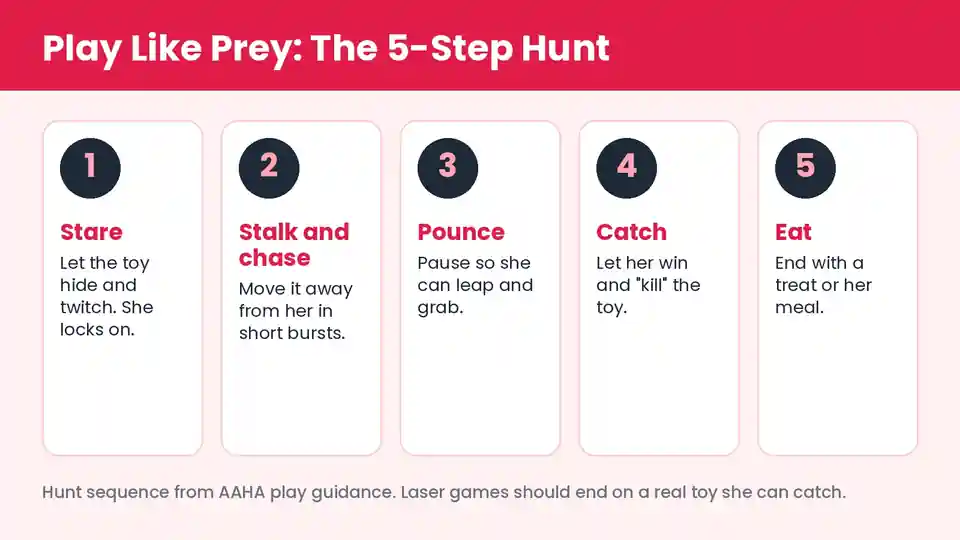
The best way to play with an indoor cat is to copy a real hunt from start to finish. AAHA describes the sequence as stare, stalk or chase, pounce, grab, and kill, then recommends letting your cat catch her “prey” and giving a treat to complete it. Here’s how that looks with a wand toy in your hand:
- Stare. Hide the toy behind a chair leg and let it twitch. Wait for her eyes to lock on and her tail to flick.
- Stalk and chase. Move the toy away from her in short bursts. Prey never runs toward a cat.
- Pounce. Pause so she can leap. Constant motion is frustrating, not fun.
- Catch. Let her grab it and “kill” it. Give her a few wins every session, not just the last one.
- Eat. End with a small treat or her meal. That’s the signal the hunt is over.
Here’s the catch with laser pointers. Your cat chases the dot, but she can never catch it, so the hunt never ends. The Humane Society of Huron Valley advises skipping laser lights and using something your cat can catch and bite. If you do use one, Best Friends Animal Society says to keep it out of her eyes and make sure she eventually catches something real. Switch to a plush toy or treat for the final pounce.
Types of Interactive Cat Toys Compared
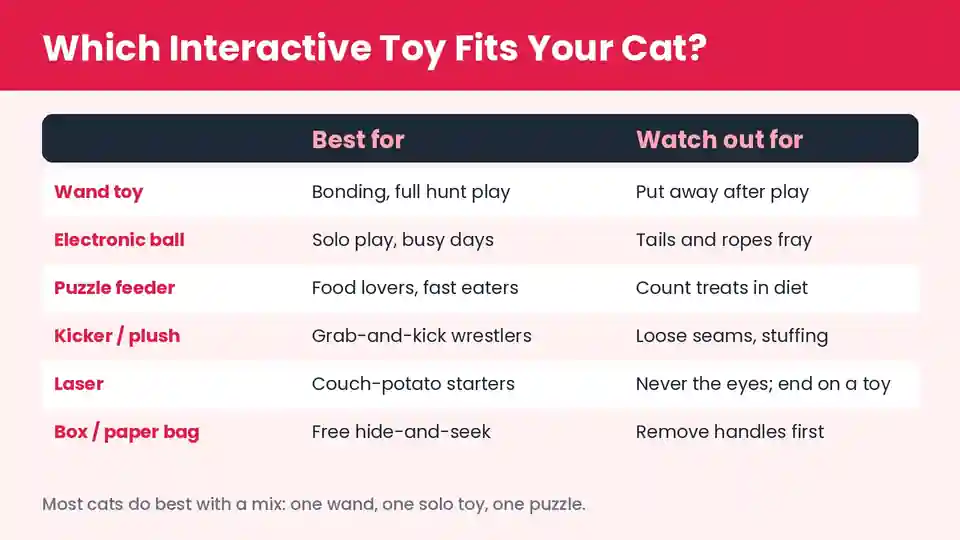
Interactive cat toys fall into two groups: toys you play with together, and toys that keep your cat busy alone. You need some of each. Now that you know how the hunt works, here’s which tool fits which job.
| Toy type | Best for | Play with you? | Watch out for |
|---|---|---|---|
| 🪶 Wand or teaser | Bonding, the full hunt | Yes | String; put away after play |
| ⚡ Electronic ball or chaser | Busy days, high-energy cats | No | Tails and ropes that fray |
| 🧩 Puzzle feeder | Food lovers, fast eaters | No | Count treats in daily food |
| 🐦 Plush kicker or flapping bird | Cats who grab and bunny-kick | Either | Loose seams, stuffing, eyes |
| 🔴 Laser pointer | Getting a lazy cat moving | Yes | Never in the eyes; end on a real toy |
| 📦 Box or paper bag | Free hide-and-seek | Either | Cut off bag handles first |
Puzzle feeders deserve a special mention. The HSHV notes they slow down cats who eat too fast, and that free feeding often leads cats to eat more than they should. A food-motivated cat who works for her kibble gets exercise for her brain and body at the same time.
What to Look for in an Interactive Cat Toy
- Safe, non-toxic materials with no small parts that can break off and be swallowed.
- Durability. Check seams, ropes and feathers often and throw out damaged toys.
- Easy cleaning, such as wipeable plastic or removable parts.
- Rechargeable or auto shut-off, so it isn’t running when nobody is watching.
- Fit for your cat. Ball and chaser toys suit high-energy cats, puzzle boxes suit food-motivated cats, and quiet bird toys suit cats who like to ambush. Breed matters too; our cat breed comparison shows which breeds run high-energy.
| Toy | Type | Best for | Power |
|---|---|---|---|
| Rolling Ball in Tunnel | Electronic | High-energy cats, solo play | USB-C rechargeable |
| Flapping Bird Sparrow | Electronic plush | Cats who love to ambush and kick | USB rechargeable |
| Wooden Whack-a-Mole | Manual | Multi-cat homes | None |
| Motion Activated Cat Ball | Electronic | Hard floors, thin carpet | USB-C rechargeable |
| Puzzle Wood Box | Puzzle plus teaser | Food-motivated cats | None |
Features as described in the manufacturers’ listings.
The 5 Best Interactive Cat Toys for Indoor Cats
These picks cover solo play, shared play and food puzzles. We describe them from the makers’ listings, not from our own testing, so check the current listing before you buy.
1. Rolling Ball in Tunnel
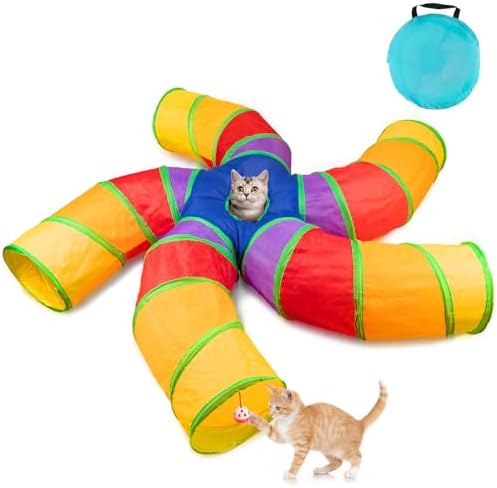
An electric ball rolls around a tunnel, so your cat can pounce, scratch and chase without you. It has three modes: slow rolling, fast rolling, and an interactive mode that starts only when the cat touches it. Bird chirps and LED lights add to the appeal.


- Power: USB-C, about 2 to 3 hours to charge
- Auto-off: stops after about 5 minutes
- Good for: solo play while you’re busy
2. Rechargeable Flapping Bird Sparrow
A soft plush bird that flaps and chirps when your cat touches it, thanks to a built-in motion sensor. A catnip pouch inside adds scent, and the USB-rechargeable design means no battery swaps. It suits cats that like to grab and kick.


- Material: soft plush, about 4 inches
- Features: chirping, catnip pouch, motion-activated
- Good for: cats that like to wrestle small “prey”
3. Interactive Wooden Cat Toy (Whack-a-Mole)
Made from solid wood, this toy pops colorful plush moles out of holes when you press the handle. It needs you to play, which makes it good for bonding, and it’s big enough for more than one cat to join in. No batteries and no assembly.


- Material: natural solid wood with plush moles
- Notes: catnip not included, no assembly
- Good for: shared play, multi-cat homes
4. Motion Activated Cat Ball
A self-moving ball with a long teaser tail and bird sounds. It offers fast, slow and interactive modes, runs for about 5 minutes, then goes to standby. It works best on hard floors or thin carpet. The package includes spare ropes, so you can replace a frayed one.
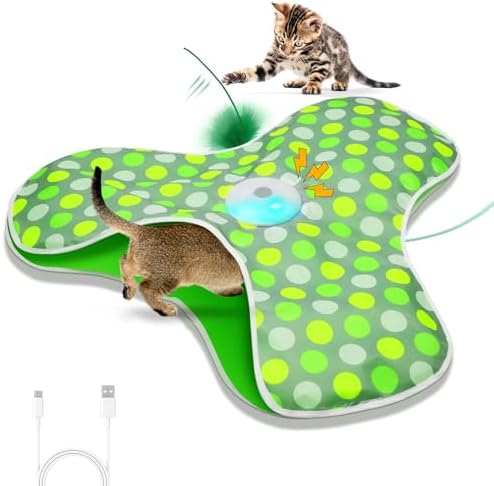


- Modes: fast, slow, interactive
- Power: USB-C, cable included
- Safety note: the rope is a string-type part, so supervise play and swap it when it frays
5. Puzzle Wood Box Interactive Cat Toy
A wood-composite puzzle box with treat compartments and a spring teaser. Your cat has to dig, paw and work for the treat, which adds mental effort to the exercise. Use dry treats or freeze-dried snacks, and count them as part of the daily food allowance.


- Material: wood composite
- Features: treat compartments, spring teaser stick
- Good for: food-motivated cats and slow feeding
Which one would we start with? For most homes, a simple feather wand for evening play plus one solo toy, like the rolling ball or the puzzle box, covers both kinds of play. Want more ideas for a cat who seems bored all the time? See our list of cat toys for bored cats.
Cat Toy Safety: The String Problem
Cats love string-like toys, and that’s the danger. dvm360 reports that string-related ingestion remains the No. 1 foreign-body emergency in cats and can cause a linear foreign body obstruction, where the gut bunches up along the string. In that same report, pet insurer data put the average treatment cost at about $2,500. VCA Animal Hospitals lists ribbon, tinsel and string among the common household hazards for cats.
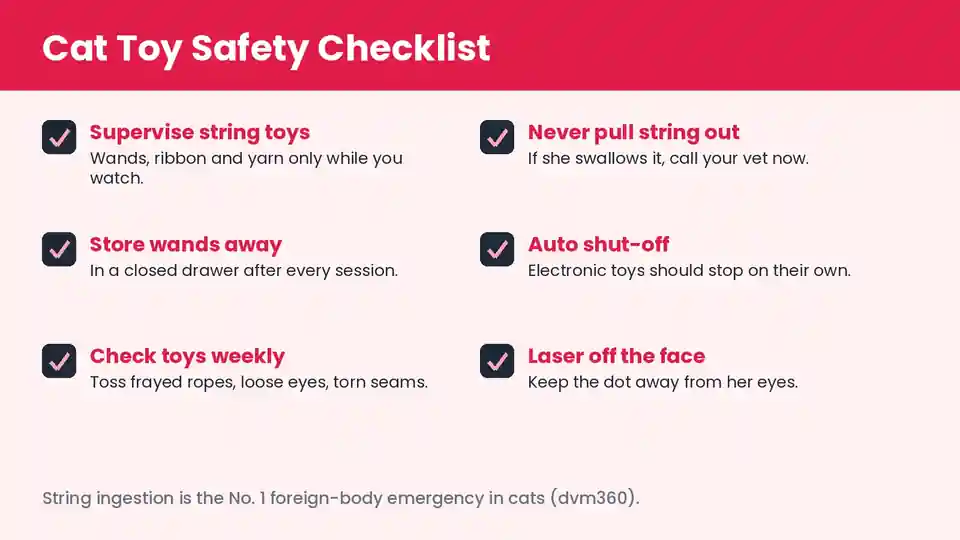
- Never leave wand toys, ribbon, yarn, dental floss or rope toys out when you aren’t watching.
- Put wand toys away after each session in a closed drawer or cabinet, not on the floor.
- Inspect toys every week and toss any with loose stitches, exposed stuffing, loose eyes or fraying ropes.
- If your cat swallows string, don’t pull it out. Call your vet right away.
How to Keep Your Cat Interested
Cats get bored with toys they see every day, so the secret is novelty. HSHV says rotating toys and keeping some just for play sessions keeps interest high, and Rover suggests rotating the collection weekly. That’s why a toy your cat ignored on Monday can feel brand new the next week.
- Rotate toys. Keep 3 or 4 out and swap them every week. Best Friends suggests storing the rest in an airtight container with a little catnip.
- Move the toy like prey. Dart, pause and hide it, rather than dragging it nonstop.
- Play before meals. The hunt, catch and eat order matches natural behavior.
- Add vertical space. A cat tree or window perch gives extra places to play and watch the world.
- Try free toys. A cardboard box or a paper bag with the handles cut off makes a great hiding spot.
✅ Daily play plan (adult indoor cat)
- ☐ Morning: 10 minutes with a wand toy before breakfast
- ☐ Daytime: one puzzle feeder or electronic toy while you’re out
- ☐ Evening: 10–15 minutes of full-hunt play, then dinner
- ☐ Bedtime: a short play burst and a small treat
- ☐ Weekly: rotate toys and check every toy for damage
Mistakes to Avoid
- Dangling the toy in her face. Real prey runs away. Move the toy away from your cat to trigger the chase.
- Never letting her win. Rover notes cats can get bored or frustrated if they never catch their prey.
- Ending laser play on the dot. Always finish on a toy she can catch or a treat.
- Using your hands as toys. It’s cute with a kitten and painful with a grown cat. Keep a wand between you.
- Leaving string toys out. One unsupervised afternoon is all it takes.
- Overfeeding with treat toys. Count puzzle treats as part of her daily food.
- Ignoring sudden changes. A cat who stops playing, or suddenly can’t settle, may be unwell. Bring it up at her annual wellness exam, or sooner if it’s sudden.
Frequently Asked Questions
How long should I play with my indoor cat each day?
Most adult cats do well with two or three 10 to 15 minute sessions a day, according to AAHA. Kittens need more short sessions, and senior cats do better with shorter, gentler play.
Are laser pointers bad for cats?
They can be frustrating because your cat can never catch the dot. If you use one, keep it away from her eyes and end the game on a toy she can catch or a treat, so the hunt feels finished.
Are electronic cat toys safe to leave on?
Choose toys with an auto shut-off and keep them away from cords and water. Anything with a rope or tail should only run when you can see your cat.
Why does my cat ignore new toys?
Try different movement styles, sounds and sizes. Some cats prefer ambush toys and others prefer chasers. Moving the toy like prey, away from her and in short bursts, often wins over a cat who seemed uninterested.
How many toys does a cat need?
Three or four at a time, in a mix of types: one electronic, one hand-held wand, one puzzle and a few small toys she can carry. Rotate the rest weekly.
Can interactive toys replace playing with my cat?
No. Electronic and food-puzzle toys are great for supervised solo time, but your own play sessions build the bond and give a more varied workout.
The Bottom Line
Interactive cat toys for indoor cats work best when they recreate a hunt: a chase, a pounce, a catch and a meal. Aim for two or three short sessions a day, mix a wand toy with one or two solo toys, rotate them weekly and put anything with string away after every game.
Start tonight. Ten minutes with a feather wand before dinner is enough to see the difference in a bored indoor cat, and your ankles will thank you.
Pick your cat’s first toy
Jump back to the 5 interactive toy picks, or bringing a new cat home? Read our cat adoption steps and first-week checklist.
Keep learning: more guides from Pet Buddies Care
- 7 common cat behavior problems and how to fix them
- Best cat toys for bored cats
- Can cats see in the dark? How cat night vision works
Sources: AAHA: How Often Should You Play With Your Cat?; AVMA: Guidelines Address Feline Environmental Needs; PetMD: How Long Should You Play With Your Cat?; dvm360: Holiday Hazards for Pets; VCA: Holiday Safety Tips for Cat Owners; Humane Society of Huron Valley: Cat Toys; Best Friends: Indoor Cat Enrichment; Rover: How Long to Play With Your Cat. Last reviewed November 2026. General information, not veterinary advice. Ask your vet about your cat’s weight, activity level or any swallowed object.
What’s the one toy your cat can’t resist? Tell us in the comments.