
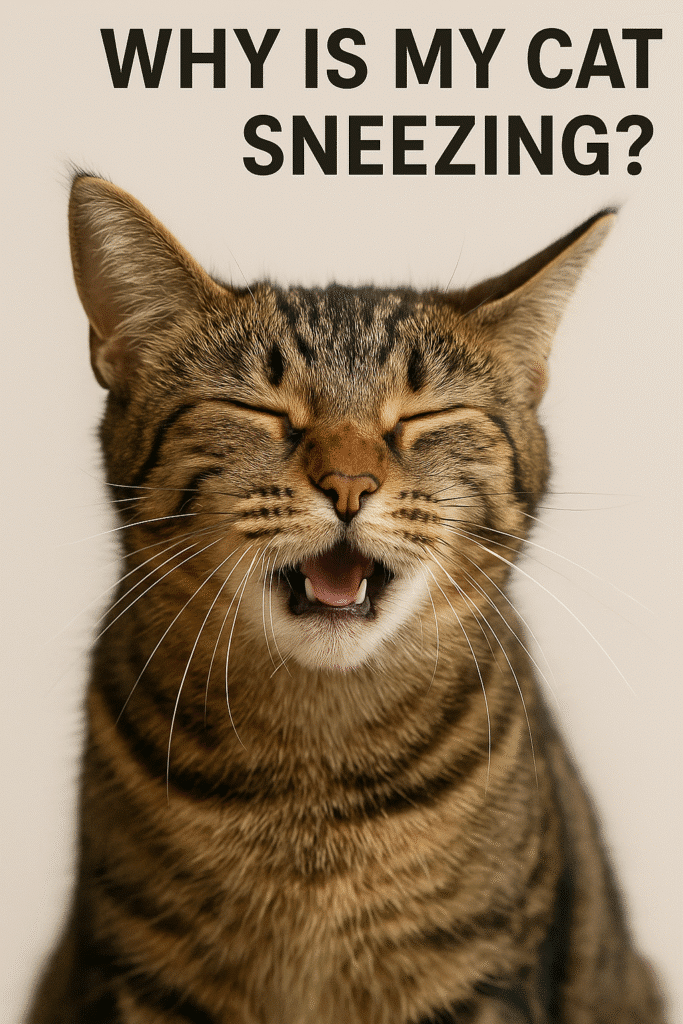
Why is My Cat Sneezing? Common Causes & How to Help
Wondering why your cat’s sneezing? Find out common causes, remedies and tips, plus top-rated allergy sprays and air purifiers to help your kitty breathe easier. Why is My Cat Sneezing? A Complete Details Analysis Hearing your cat sneeze can be cute at first, but if it keeps happening you might start to worry. Pet owners often ask, “why is my cat sneezing?” because there are many possible reasons behind those tiny “achoo” moments. An occasional sneeze in a cat is usually no cause for alarm, much like it is for humans. Often, a sneeze is simply the body’s way of clearing irritants from the nasal passages. Sometimes excitement or sudden movement can even trigger a random sneeze in cats. However, if your cat is sneezing repeatedly or persistently, especially along with other symptoms, it could signal an underlying issue that needs attention. In this article, we’ll explore why cats sneeze, from harmless causes to health concerns. You’ll also find helpful tips, home remedies, and guidance on when to see a vet. Let’s dive in and help get to the bottom of your cat’s sneezes! Common Causes of Cat Sneezing Cats sneeze for many of the same reasons we do – anything that irritates their nose can trigger a sneeze. Also, some causes are benign or short-lived, while others may require veterinary care. Below are the most common reasons a cat might be sneezing: 1. Upper Respiratory Infections (Cat “Colds”) One of the most common causes of frequent sneezing in cats is an upper respiratory infection (the feline equivalent of a cold). These infections are often viral. In fact, feline herpesvirus (FHV-1) and calicivirus – both viruses covered by routine cat vaccines – are responsible for about 90% of feline upper respiratory infections. Sneezing is a primary symptom of these infections, which is why a cat with a “cold” will sneeze repeatedly. 2. Irritants and Allergens in the Environment Just like people, cats can have sensitive noses. Cats can be sensitive to many inhaled irritants and allergens, including dust, cigarette smoke, strong spices, cleaning chemicals, scented candles, pollen, and mold. When a cat inhales something irritating, a sneeze is the body’s way of expelling it. If your cat tends to sneeze during certain activities or in specific areas of the house, an environmental irritant could be to blame. For example: Tip: To reduce irritants, consider using an air purifier in the areas where your cat spends the most time. Keeping your home smoke-free and avoiding strong chemicals can go a long way. Simple steps like these help ensure your cat isn’t sneezing due to an avoidable irritant in their environment. (We’ll review an air purifier product in the sections below.) 3. Foreign Objects or Blockages Sometimes cats sneeze because something is literally stuck in their nose. Curious cats may inhale tiny foreign particles or objects. Blades of grass, bits of feather or fluff, or other small debris can get lodged in a nostril. The body responds with repeated sneezes to try to dislodge the object. If the object is small, sneezing might successfully eject it. For larger or more stubborn foreign bodies, the cat may continue sneezing, paw at their face, or have nasal discharge (often one-sided from the affected nostril). In these cases, a vet visit is needed – the vet can visualize inside the nasal passages and flush out or remove the foreign material. Never attempt to poke around in your cat’s nose at home, as you could push the object further. When to see a vet: If your cat has sudden, frequent sneezing fits and one side of their nose seems blocked or bleeding, a foreign object could be the cause. This is especially suspect if your cat was exploring plants or dusty nooks right before the sneezing started. 4. Dental Problems Believe it or not, dental disease can sometimes cause a cat to sneeze. How? The roots of a cat’s upper teeth are very close to the nasal passages. If an upper tooth gets infected or an abscess form, it can create a hole (or fistula) between the mouth and nose. Food or bacteria can then travel from the mouth into the nasal area and trigger sneezing and nasal discharge. Cats with a dental-related sneezing problem often have other signs like bad breath, red or swollen gums, trouble eating, or even a swelling on the face. If your cat has sneezing plus obvious dental issues (like brown teeth or inflamed gums), have the vet examine their mouth. Treating the tooth infection or doing a dental cleaning often alleviates the sneezing once the oral problem is resolved. 5. Nasal Polyps or Tumors In chronic cases (especially in older cats), growths in the nasal passages can be a cause of sneezing. Nasal polyps are benign growths that can develop in the back of the throat or nose, more commonly in young cats or those with chronic infections. They can cause persistent sneezing, congestion, and nasal discharge. Polyps often need to be removed surgically by a vet. Tumors in the nasal cavity can also occur in older cats. These may be cancerous and usually cause continual sneezing, often with bloody nasal discharge or difficulty breathing. Keep in mind these are fewer common causes of sneezing. Your vet might investigate for polyps or tumors if a cat has long-term sneezing that doesn’t respond to other treatments. Diagnosis may involve rhinoscopy (looking up the nose with a tiny scope) or imaging like X-rays. If your vet ever mentions these possibilities, they will guide you through the next steps and treatments. 6. Vaccines or Recent Vet Visits Has your cat recently had a vaccine up the nose? Some vaccines for diseases like Bordetella or a feline flu are given as nose or eye drops. These intranasal vaccines can cause mild sneezing for a few days afterward as a side effect. This kind of sneezing is usually short-lived and resolves on its own. Also, some cats might sneeze a few times after a
Why is My Cat Sneezing? Common Causes & How to Help Read More »