
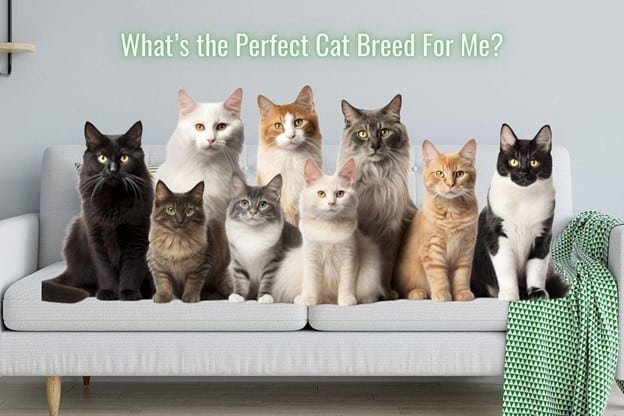
What Is the Best Cat Breed for Me? 9 Breeds Compared by Personality, Grooming and Home
The best cat breed for you depends on your time, home size, household, allergies and budget. Calm, low-grooming breeds like the British Shorthair suit busy people, Ragdolls and Maine Coons suit families, and Bengals, Siamese and Abyssinians suit active homes that can give lots of play. Mixed-breed shelter cats are often a great match too. Key Takeaways Match energy levels: an active breed in a quiet apartment can lead to behavior problems. Check grooming: long-haired breeds need daily brushing, short-haired cats need far less. No cat is truly hypoallergenic. Some breeds may cause fewer symptoms for some people, so spend time with the cat first. Research health issues of a breed before buying, and choose reputable breeders. Consider adoption. Shelters have many purebred and mixed cats. This article contains affiliate links. We may earn a commission if you buy through them, at no extra cost to you. See our Disclosure. Step 1: Think About Your Lifestyle Time: how much daily play and grooming can you give? Home: apartment or house, indoor-only or secure outdoor space? Household: children, dogs or other cats? Allergies: does anyone react to cats? Energy level: lap cat or acrobat? Budget: grooming, food, vet care and possible breed-specific health costs. Cat Breeds at a Glance Breed Temperament Energy Grooming Good for Persian Calm, gentle Low Daily Quiet homes Maine Coon Friendly, sociable Medium Regular brushing Families, homes with space Siamese Vocal, social High Low People home most of the day Ragdoll Relaxed, loves being held Low to medium Regular brushing Families, indoor homes Bengal Athletic, smart Very high Low Active, experienced owners Scottish Fold Sweet, adaptable Medium Low to medium See the health note below Sphynx Social, attention-loving High Weekly bathing Owners who want a very people-focused cat British Shorthair Calm, independent Low to medium Low Busy people, apartments Abyssinian Curious, active High Low Active homes Individual cats vary. Always meet the cat before deciding. 9 Popular Cat Breeds 1. Persian Long, luxurious fur, a round face and a calm, affectionate nature. They need daily grooming to prevent mats, and their flat faces can cause breathing, eye and dental problems. Persians can also inherit polycystic kidney disease, so ask breeders about screening. 2. Maine Coon Large, gentle and sociable, Maine Coons often get along with children and dogs. Their semi-long coat needs regular brushing, and they like climbing and interactive play. Ask about heart (HCM) and hip screening. 3. Siamese Vocal, curious and very attached to their people. A short coat means little grooming, but they need attention, play and company, and may be unhappy if left alone all day. 4. Ragdoll Medium to large, with silky fur and blue eyes. Ragdolls are relaxed, gentle and often enjoy being held. Brush regularly and keep them indoors. They are a popular choice for families. 5. Bengal Spotted or marbled coats and a lot of energy. Bengals are smart and athletic, and need climbing space, puzzle toys and daily play. A bored Bengal can become destructive, so they suit experienced, active owners. 6. Scottish Fold Sweet and adaptable with folded ears and a round face. The fold gene is linked to a painful cartilage and joint condition, which is why some countries and breed groups restrict breeding. If you are considering one, talk to your vet and ask about the breeder’s health practices, or consider a cat without the fold gene. 7. Sphynx Hairless, wrinkled and very social. Without fur, skin oils build up, so most need regular baths, plus sun protection and warmth. They may still trigger allergies, because allergens are in saliva and skin, not only fur. Ask about heart screening. 8. British Shorthair Stocky with a plush coat and round face. Calm and independent, they do well in apartments and with busy owners. Weekly brushing is enough, and watch their weight. 9. Abyssinian Sleek, curious and always on the move. Abyssinians love climbing and exploring, so provide cat trees and puzzle toys. They are not ideal for homes where cats are left alone for long periods. Mixed-Breed Cats Domestic shorthairs and mixed-breed cats are healthy, varied and often available at shelters. Spend time with the individual cat, because personality matters more than breed. See our step-by-step guide on how to adopt a cat in the USA. Allergies and “Hypoallergenic” Cats No cat breed is completely hypoallergenic. Allergy symptoms come mainly from a protein called Fel d 1, found in saliva and skin. Some people react less to certain cats such as Siberians, Balinese or Devon Rex, but it varies by individual. Spend time with the specific cat and talk to your doctor before you commit. Adopt or Buy? Adopt Buy from a breeder Cost Often lower, may include vaccines and spay/neuter Usually higher Choice Many ages, breeds and mixes Specific breed and lineage Health info Basic checks, history may be limited Ask for health screening records Tip Meet several cats before choosing Visit the breeder and meet the parents. Avoid kitten mills and online sellers who will not let you visit Both can work. Pick what fits your priorities. Tips for Choosing Your Cat Meet several cats and watch how they interact with people. Ask questions about health, history and temperament. Consider an adult cat, whose personality is already known. Be patient. The right cat is worth waiting for. Getting Ready for a New Cat Supplies: litter box, food and water bowls, scratching post, bed and toys. A quiet room where your cat can settle in. A vet visit within the first week. Cat Toys Litter Box More guides: cat toys for bored cats, common cat behavior problems and our pet shop. A Lifetime Commitment Many cats live 12 to 18 years or longer, so think of your cat as a long-term family member and plan for food, vet care and unexpected costs. Pets can bring comfort and companionship, but they are a daily responsibility. Frequently Asked Questions What is the best cat breed for first-time owners? Calmer breeds such as the British Shorthair or
What Is the Best Cat Breed for Me? 9 Breeds Compared by Personality, Grooming and Home Read More »