
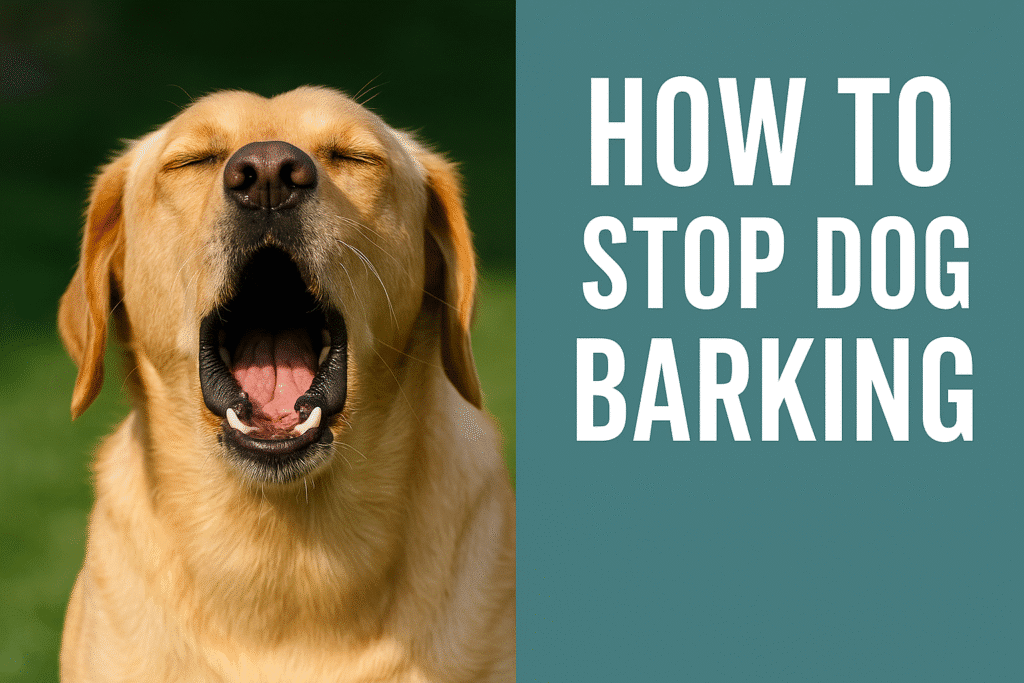
How to Stop Dog Barking – 7 Easy Tips & Best Products
Stop your dog’s barking with proven tips, training techniques, and top-rated calming products. Learn how to stop dog barking fast, even in tough situations. How to Stop Dog Barking: A Complete Guide for Pet Owners Does your dog bark at everything – the doorbell, the neighbors, or even a falling leaf? You’re not alone. Excessive barking is one of the most common behavior problems reported by dog owners, making up as much as 35% of canine behavior complaints according to studies (Cornell University) – so it’s a problem many families face. The good news is that you can train your dog to bark less using kind, effective methods. In this guide, we’ll cover how to get your dog to stop barking through understanding why dogs bark, proven training techniques, and a review of the best products (like safe bark collars and deterrents) that can help. Before we dive into fixes, remember that barking is natural for dogs – it’s one of the ways they communicate. Dogs bark for many different reasons, from excitement and play to alarm or boredom. Understanding why your dog is barking is key to choosing the right solution. For example, a dog barking out of boredom needs more stimulation, while a dog barking at the mail carrier may be feeling protective or startled. Once you know the cause, you can apply the right training or tool to curb the noise. Let’s look at some effective ways to stop your dog from barking, step by step. Why Do Dogs Bark? Dogs can’t speak words, so they “talk” through barking. But not all barks mean the same thing. Here are some common reasons dogs bark: Understanding the why behind your dog’s barking will help you pick the right strategy to address it. A bored dog needs more exercise or toys, while an anxious dog might need confidence-building and calming techniques. Keep these motivations in mind as we move into training solutions. Training Techniques to Get Your Dog to Stop Barking The most effective and long-lasting way to reduce barking is through training and behavior change. You want to teach your dog when it’s okay to bark and when it’s time to be quiet. Yelling or punishing a dog for barking often backfires – they may think you’re barking along with them or become more anxious. Instead, use calm, consistent training. Here are some proven techniques: 1. Ignore Attention-Seeking Barking If your dog is barking at you for attention or because they want something, one of the best responses is no response at all. It might sound odd, but dogs sometimes bark because it reliably makes you look at them, talk to them, or even scold them. From the dog’s perspective, any attention – even you yelling “Quiet!” – is a reward. Experts warn that yelling just sounds like you’re barking too and can encourage more noise. Instead, stay quiet and turn away when your dog barks for attention. Don’t make eye contact and don’t yell. Wait until they pause, even for a few seconds, then quickly reward the silence with praise or a treat. Your dog will start to learn that staying quiet is what gets your attention, whereas barking gets them nothing. This takes patience (the barking might briefly get worse before it gets better as the dog tests you), but if you’re consistent, it’s a very effective method. Remember, consistency is key – if one day you ignore barking but the next day you give in, your pup will keep trying the barking trick. So hold firm and reward the good (quiet) behavior. 2. Teach the “Quiet” Command It may sound counterintuitive, but you can teach your dog to bark on command and also to be quiet on command. Training “Speak” and “Quiet” together can help your dog understand what you want. Here’s a simple way to train “Quiet”: Be patient and avoid shouting the cue. Say it once and wait. Dogs don’t speak English, so they learn by the outcomes of their actions. If being quiet brings something good every time, they’ll want to do it. This method is a form of positive reinforcement training – you’re adding a reward to encourage the behavior you want (silence). It’s humane and effective, and often dogs come to enjoy the training like a game. 3. Desensitize Your Dog to Triggers If your dog barks at specific triggers – for example, every time a delivery person comes to the door or whenever another dog walks by the front window – you can use desensitization and counter-conditioning to change their reaction. This means gradually teaching your dog to be less reactive to the stimulus and even have a positive association with it. Here’s how: For triggers like people passing by the window, a parallel approach is to manage the environment. You can block your dog’s view by closing curtains or using a frosted window film, especially during times of day when triggers are frequent (like school kids walking by). This removes the temptation to bark in the first place while you work on training. In short, you’re setting your dog up for success. 4. Provide More Exercise and Enrichment It’s often said that “a tired dog is a quiet dog.” One common reason for excessive barking is pent-up energy or boredom. If your dog spends hours alone or doesn’t get much physical and mental exercise, barking can be an outlet. Increasing your dog’s daily activity can dramatically cut down on nuisance barking. By enriching your dog’s life with more activity and fun, you’ll find they have much less reason to bark incessantly. Often when owners address this area, the barking problem improves as a happy side effect. 5. Stay Calm and Be Consistent Dogs often take cues from our behavior. If you react to their barking with yelling, frustration, or chaos, it can actually feed into more barking. As hard as it may be, stay calm when your dog barks. Use a firm (not angry) voice for any
How to Stop Dog Barking – 7 Easy Tips & Best Products Read More »