
By Md Soriful Islam, Pet Buddies Care · Updated November 2026 · Facts checked against the Merck Veterinary Manual and Utah State University Extension
Do rabbits lay eggs? No. Rabbits are mammals, so a mother rabbit (a doe) carries her babies inside her body for about a month and then gives birth to live young called kits. The egg-laying bunny comes from an old German Easter legend about a hare, not from biology.
It’s one of those questions kids ask at the Easter table that makes the grown-ups pause. Picture it: a basket of pastel eggs, a chocolate bunny, and a six-year-old asking, “So which one came out of the rabbit?” If you weren’t completely sure of the answer, you’re in good company.
Below you’ll find how rabbits really give birth, a day-by-day pregnancy timeline, a quick look at baby bunnies’ first weeks, where the egg-laying Easter Bunny story came from, an easy way to explain it to kids, which animals do lay eggs, and what to do if you find a nest of wild baby rabbits in your yard.
🐰 Quick Answer: Do Rabbits Lay Eggs?
- No. Rabbits are placental mammals that give birth to live babies called kits.
- Pregnancy: about 31 days on average (normal range roughly 28 to 33 days).
- Newborns: hairless, blind and deaf; eyes and ears open by about day 10.
- In the ground? No. What you find in the grass is a fur-lined nest of live kits, not eggs.
- The myth: comes from the German “Easter Hare” (Osterhase), recorded in the late 1600s.
- Egg-laying mammals: only the platypus and four species of echidna.
In this guide
- Do rabbits lay eggs? The short answer
- Do rabbits lay eggs in the ground?
- How do rabbits give birth?
- Rabbit pregnancy timeline, day by day
- A baby bunny’s first weeks
- Why people think rabbits lay eggs
- How to explain it to kids
- Rabbits vs. hares
- Which animals do lay eggs?
- Found a nest of baby bunnies?
- For pet rabbit owners
- FAQ
Do Rabbits Lay Eggs? The Short Answer
Rabbits never lay eggs. They belong to the placental mammals, the same big group as dogs, cats and people. A placental mammal grows its babies inside the mother’s uterus, where a placenta feeds them, and then gives birth to live young that drink their mother’s milk. Scientists call this viviparous reproduction. Animals that lay eggs are oviparous.
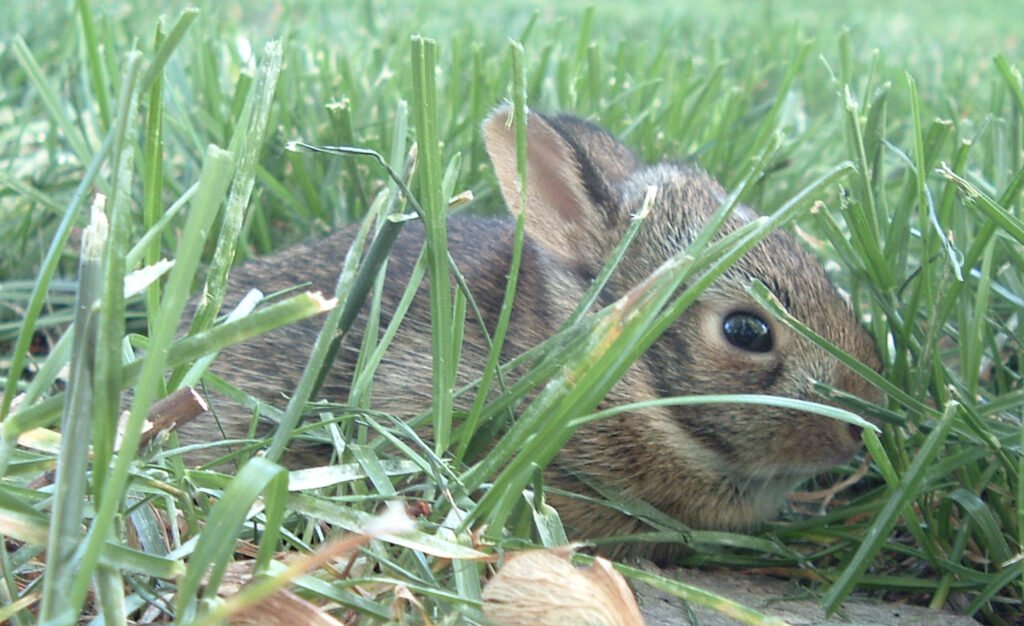
Here’s where the confusion can creep in. A doe does make egg cells (ova) in her ovaries, just like every female mammal, including humans. But those eggs are microscopic. They stay inside her body, are fertilized there, and grow into kits in her uterus. Nothing with a shell is ever made, and nothing is ever “laid.”
One more mix-up worth clearing up while we’re here: rabbits aren’t rodents. They belong to a separate order called lagomorphs, along with hares and pikas. Lagomorphs have a second, small pair of upper front teeth tucked behind the first pair, which rodents don’t have.
Do Rabbits Lay Eggs in the Ground?
No. Rabbits don’t lay eggs in the ground or anywhere else. What people sometimes spot in a lawn is a rabbit nest: a shallow hole lined with grass and the mother’s own fur, with live kits tucked inside. Wild European rabbits often give birth in a burrow instead. Either way, the babies are already born.
So what about the small eggs you might find in your yard in spring? Those come from birds, and sometimes from turtles, snakes or lizards. A real cottontail nest looks very different: it’s about the size of your palm, covered with a loose blanket of grass and tufts of soft gray-brown fur. If you lift the cover, you’ll see tiny bunnies, not shells. (Please put the cover right back. More on that in the nest section below.)
So if rabbits don’t lay eggs, how do the babies actually arrive?
How Do Rabbits Give Birth? Step by Step
Rabbit birth is fast, quiet and usually happens when nobody’s watching. Here’s the whole process, from mating to a nest full of kits.
- Mating triggers ovulation. Rabbits are “induced ovulators.” A doe releases eggs after mating rather than on a fixed monthly cycle. The Merck Veterinary Manual notes that does are receptive to mating about 14 of every 16 days, which helps explain why rabbits breed so easily.
- Pregnancy lasts about a month. Merck’s gestation table lists 31 days for rabbits, and Utah State University Extension gives a range of 28 to 33 days. Small litters tend to run a little longer.
- The doe builds a nest. A day or two before birth, she gathers hay or grass and pulls fur from her own chest and belly to line it. That soft fur is the kits’ blanket, since they can’t keep themselves warm yet.
- Kindling. Giving birth in rabbits is called kindling. It’s quick, often 7 to 30 minutes for the whole litter according to USU Extension, and usually happens late at night or early in the morning.
- Short, rich feedings. Unlike a bird sitting on eggs, the doe doesn’t stay on the nest. She nurses only once or twice a day, and each feeding lasts under three minutes. Rabbit milk is very rich, so that’s all the kits need.
Rabbit Pregnancy Timeline: Day by Day
From mating to a weaned litter takes only about two months. Here’s what happens at each stage, using the figures from Utah State University Extension and the Merck Veterinary Manual. Breeds differ, so treat these as typical ranges rather than exact dates.
- Day 0 – Mating. Ovulation follows mating within about 10 hours. The eggs are fertilized inside the doe and never leave her body.
- About day 14 – Pregnancy check. An experienced breeder or vet can feel the small embryos through the belly. Don’t try to squeeze hard at home; it takes practice.
- Last 2 weeks – Steady weight gain. The doe eats more and her belly rounds out. USU suggests increasing her feed 10 to 15 days before birth.
- About day 28 – Nest box in. Add a nest box with straw or hay at least 3 days before the due date (skip sawdust).
- Days 28 to 33 – Kindling. She pulls fur, finishes the nest and gives birth, often at night.
- Day 32 or later with no kits? Call your vet. Some does need help, and a false pregnancy can look very similar.
- Kits’ first week. Hairless at birth; fur begins to show within days.
- Kits’ day 10. Eyes and ears open.
- Kits’ week 3. They start nibbling hay and pellets.
- Kits’ week 4 to 5. Weaning. USU says kits shouldn’t leave their mother before 4 weeks old, and males and females should be separated by 8 weeks.
A Baby Bunny’s First Weeks
Newborn kits look nothing like the fluffy bunnies on Easter cards. According to Merck, they’re born naked, blind and deaf. Hair starts to show in just 2 to 3 days, and by day 10 their eyes and ears are open. Here’s how it all adds up for a domestic rabbit.
| Stage | Domestic rabbit |
|---|---|
| 🥚 How babies are born | Live birth, never eggs |
| 🗓️ Pregnancy length | About 31 days (roughly 28–33) |
| 👶 Litter size | Varies a lot: one or two kits in small breeds; Merck notes many medium-sized does have 12–15 |
| 🌡️ Newborn kits | Hairless, blind and deaf; can’t control body heat until about day 7 |
| 🐇 Fur appears | Around day 2–3, with a fuller coat by about day 7 |
| 👀 Eyes and ears open | By about day 10 |
| 🍼 Nursing | Once or twice a day, under 3 minutes each |
| 🌿 First solid food | Around 3 weeks old |
| 🥬 Weaning | About 4–5 weeks old |
| 🔁 Can conceive again | As soon as 24 hours after giving birth |
Sources: Merck Veterinary Manual; Utah State University Extension. Ranges vary by breed and individual rabbit.
That last row surprises most people. A doe can get pregnant again within a day of giving birth. If you’ve ever heard the phrase “breeding like rabbits,” now you know why. It also explains why the spring meadow outside your window can go from two rabbits to a dozen in what feels like no time.
Why are baby rabbits called kits?
Baby rabbits are called kits, short for “kittens,” the same old word used for young cats. “Bunny” isn’t a baby name at all. It’s just a friendly, informal word for any rabbit, young or old. A mother rabbit is a doe, a father is a buck, and giving birth is called kindling.
So with all these fast-growing furry babies, how did eggs ever get attached to rabbits? That story starts in 17th-century Germany.
Why Do People Think Rabbits Lay Eggs? The Easter Bunny Story
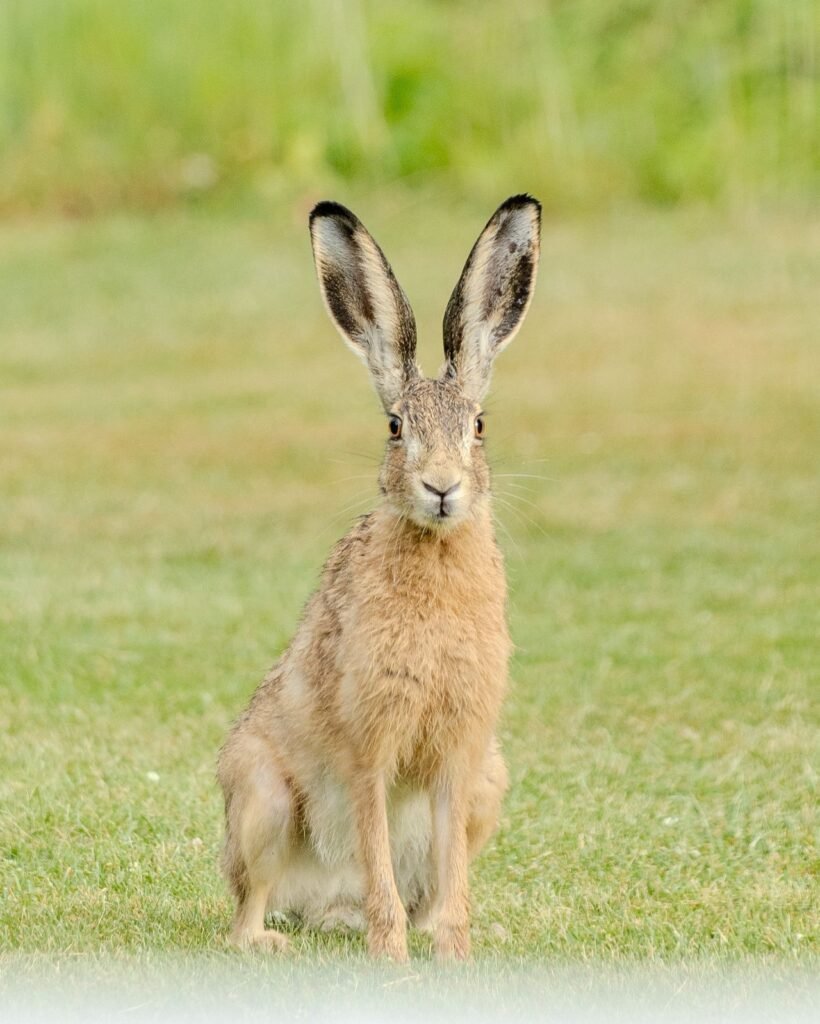
The egg-laying bunny is folklore, and it’s surprisingly old. The best-known early record is a 1682 essay called De ovis paschalibus (“About Easter Eggs”) by the German physician Georg Franck von Franckenau. As Mental Floss explains, he described German children searching for eggs that were supposedly laid by a hare. In other words, an early Easter egg hunt.
German immigrants brought the tradition to Pennsylvania in the 1700s. They called the egg-bringing hare the Osterhase, or “Oschter Haws” in Pennsylvania Dutch, and children made nests for it to fill with colored eggs. Over time the hare turned into the more familiar rabbit, nests turned into baskets, and the American Easter Bunny was born.
Why a hare and eggs?
Both were long-standing symbols of spring and new life. Hares and rabbits have lots of babies in spring, and eggs have always stood for new beginnings. There’s a practical side too: eating eggs was traditionally off-limits during Lent in many Christian communities, so by Easter there were plenty of eggs to decorate, give and eat.
You may also read that the Easter Hare came from a pagan goddess called Ostara or Eostre. Historians treat that with real caution. The goddess link was proposed in the 1800s, and there’s little early evidence tying a hare to her. It’s a nice story, but it’s mostly modern.
How to Explain “Do Rabbits Lay Eggs?” to Kids
Keep it short and true, and you won’t spoil the fun of an egg hunt. Most kids from about age four can follow a simple “mammals vs. egg-layers” idea, especially if you connect it to animals they already know.
- Start with what they know. “Puppies and kittens grow inside their moms and are born as babies. Bunnies do that too.”
- Name the egg animals. “Chickens, ducks, turtles and fish lay eggs. Our Easter eggs came from chickens.”
- Explain the story as a story. “A long time ago in Germany, people told a fun tale about a hare that brought eggs at Easter. We still play that game today.”
- Add a “wow” fact. “Baby bunnies are born with no fur and their eyes closed. They open their eyes when they’re about 10 days old.”
Older kids often love the odd one out: the platypus, a furry mammal that really does lay eggs. It makes a great follow-up question for the car ride home.
Rabbits vs. Hares: Two Very Different Babies
Since the legend began with a hare, it helps to know that hares and rabbits are different animals. Their babies show the difference best. Rabbit kits are helpless at birth, while baby hares are ready to move almost right away.
| Rabbit | Hare | |
|---|---|---|
| Baby name | Kit (or kitten) | Leveret |
| At birth | Hairless, eyes closed, helpless | Fully furred, eyes open, can move within hours |
| Pregnancy | About 31 days | Longer: Merck lists about 36 days |
| Where babies are born | A fur-lined nest or burrow | A shallow dip in the ground |
| Kept as pets? | Yes, domesticated | No, wild only |
| Lays eggs? | ❌ No | ❌ No |
Sources: Merck Veterinary Manual; Live Science.
So, do bunnies lay eggs? Whether you mean a pet rabbit, a wild cottontail or a hare, the answer is the same: no.
Which Animals Do Lay Eggs?
Now that you know rabbits are off the list, here’s who’s actually on it. Egg-laying is common in the animal world. It’s just rare among mammals.
- All birds lay shelled eggs and keep them warm until they hatch. The eggs in your Easter basket came from chickens.
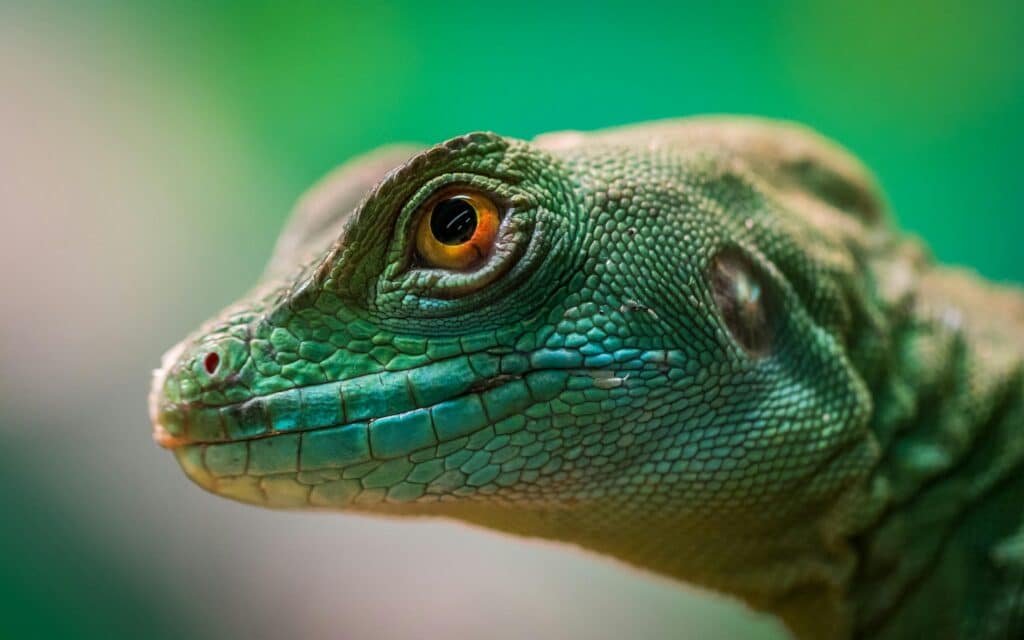
- Most reptiles, including turtles and many snakes and lizards, lay eggs. Some snakes and lizards give live birth instead. If you keep one, our guide on how to take care of a pet turtle covers the basics.
- Most amphibians, fish and insects reproduce with eggs.
- Monotremes are the only egg-laying mammals. According to Britannica, the group has just five living species: the platypus and four echidnas, all from Australia and New Guinea. Their young hatch and then drink milk. Rabbits aren’t related to this group.
| Animal | Lays eggs? | Gives live birth? |
|---|---|---|
| 🐇 Rabbit | No | Yes |
| 🐔 Chicken | Yes | No |
| 🐢 Turtle | Yes | No |
| 🦎 Lizards and snakes | Most species | Some species |
| 🦆 Platypus | Yes | No (a mammal that lays eggs) |
| 🐶 Dog, 🐱 cat, 🐹 hamster | No | Yes |
Found a Nest of Baby Bunnies? What to Do
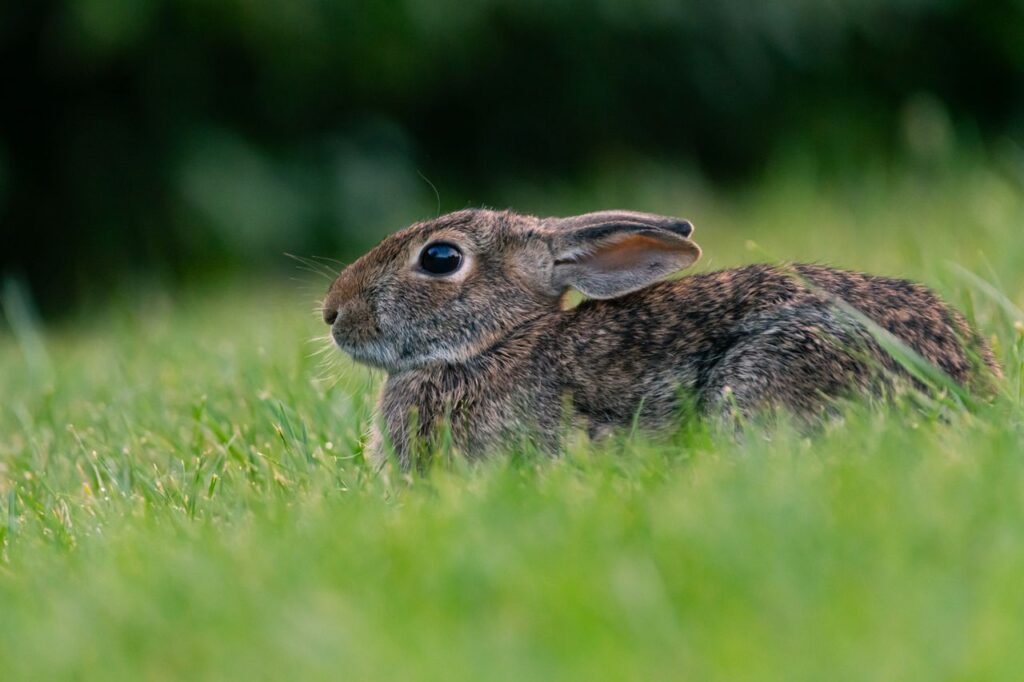
Here’s a scene that plays out in backyards every spring. You’re mowing the lawn, you spot a shallow dip lined with fur, and inside are four tiny bunnies with no mother in sight. Your first instinct is to rescue them. Please don’t, at least not yet.
The Wisconsin Humane Society explains that mother rabbits visit their babies only about twice a day, usually around dawn and dusk. If the babies aren’t hurt, there’s a good chance they can stay right where they are. Here’s what to do:
- Leave the nest where it is. Cover it back up with the fur and grass if it was disturbed. A mother won’t recognize a nest that has been moved.
- Do the twig test. Lay twigs or pieces of string in a criss-cross pattern over the nest. If they’ve been moved by the next morning, the mother is probably visiting.
- Keep dogs and cats away, especially at dawn and dusk, and skip mowing that patch for a few weeks.
- Be patient. Young cottontails are on their own at about four to five weeks old, when they’re only four to five inches long.
- Call a licensed wildlife rehabilitator if a baby is injured, cold, or the mother clearly hasn’t come back. Wild baby rabbits are very hard to raise, so don’t try to feed them yourself.
✅ Wild Bunny Nest Checklist
- ☐ Babies left in place and nest re-covered
- ☐ Twig or string X placed over the nest
- ☐ Pets kept indoors or leashed near the nest
- ☐ Mower kept away from the area
- ☐ Local wildlife rehabilitator’s number saved, just in case
For Pet Rabbit Owners: Pregnancy, False Pregnancy and Spaying

If you share your home with rabbits, the biology above isn’t just trivia. Because rabbits ovulate when they mate, an unspayed doe kept with an unneutered buck can get pregnant very quickly, and again within a day of giving birth. According to USU Extension, small breeds may be able to mate as early as 3 to 4 months old, while larger breeds may not be ready until 8 to 9 months.
A doe can also have a false pregnancy (pseudopregnancy). Merck says this is common in rabbits and can follow being mounted by another rabbit, a male nearby, or other triggers. She may pull fur and build a nest even though no kits are coming. It usually settles on its own, but ask your vet if she stops eating or seems unwell.
| Sign | Real pregnancy | False pregnancy |
|---|---|---|
| 🪺 Pulls fur and builds a nest | Yes, in the last days before birth | Yes, sometimes |
| ⚖️ Steady weight gain | Yes, through the last two weeks | Little or none |
| 🩺 Vet can feel embryos | Yes, from about day 14 | No |
| 🐇 Kits arrive | Around day 28 to 33 | Never |
Only a vet exam (or the arrival of kits) can say for sure. Ranges vary by rabbit.
That’s why most vets recommend spaying pet does. According to Best Friends Animal Society, a high percentage of unspayed female rabbits develop uterine or ovarian cancer between 2 and 5 years old, and most young rabbits can be spayed between 3 and 6 months. Merck notes some strains have an 80% chance of uterine cancer by age 3. Spaying also prevents surprise litters. Talk to a rabbit-savvy vet about the right timing for your bunny, and keep up with annual wellness exams so problems are caught early.
For everyday care, read our guide on how to care for a pet bunny rabbit, find out whether rabbits sleep with their eyes open, and check whether rabbits can eat grapes before you share treats.
Common Mistakes to Avoid
- Moving a wild nest “to safety.” The mother won’t find or accept it.
- Assuming babies are orphaned because you never see the mother. That’s normal rabbit behavior.
- Keeping an unspayed doe with an unneutered buck “just for company.” You’ll likely have kits in about a month.
- Waiting too long when a doe is overdue. If there are no kits by about day 32, call your vet rather than waiting it out.
- Buying a bunny as an Easter gift without planning for its whole life. Spayed and neutered pet rabbits can live 8 to 12 years or more. If you’re weighing a first pet, our list of the easiest pets to take care of can help.
Frequently Asked Questions
Do rabbits lay eggs at Easter?
No. Rabbits never lay eggs at any time of year. The egg-laying Easter Bunny comes from a German folk legend about a hare, recorded in the late 1600s.
Do rabbits lay eggs in the ground or in nests?
No. A doe digs or builds a fur-lined nest a day or two before giving birth, but she puts live kits in it, not eggs. Any small eggs you find in the grass came from birds or reptiles.
Are there any rabbits that lay eggs?
No. Every rabbit and hare species gives birth to live young. The only mammals that lay eggs are the platypus and four species of echidna.
How long are rabbits pregnant?
About 31 days on average, with a normal range of roughly 28 to 33 days. If a doe passes about day 32 with no kits, call your vet.
How many babies do rabbits have?
It varies a lot. Small breeds and first-time mothers may have just one or two, while many medium-sized does have 12 to 15 kits.
Are rabbits born with fur?
No. Rabbit kits are born hairless, blind and deaf. Hair starts to show in 2 to 3 days, and their eyes and ears open by about day 10. Baby hares are born with fur and open eyes.
The Bottom Line
Rabbits don’t lay eggs, and they never have. They’re mammals that carry their babies for about a month and give birth to tiny, hairless kits in a fur-lined nest. The egg-laying bunny is a charming German Easter story about a hare that crossed the ocean with immigrants and stuck around.
If you have a pet rabbit, the real takeaway is practical: plan ahead, talk to your vet about spaying, and give your bunny a happy, healthy life. Our complete rabbit care guide is a great next step.
Keep learning: more rabbit guides from Pet Buddies Care
Sources: Merck Veterinary Manual: Management of Rabbits; Merck: Approximate Gestation Periods; Utah State University Extension: Rabbit Selection and Breeding; Wisconsin Humane Society; Best Friends Animal Society; Britannica; Mental Floss; Live Science. Updated November 2026. This guide is general information, not veterinary advice. Check with your vet about your own rabbit. If you think your pet ate something toxic, call your vet or the ASPCA Animal Poison Control Center at (888) 426-4435.
Did you believe the Easter Bunny laid eggs when you were little? Tell us in the comments.